Start with the symptom, not with the job title
Plumbing is a dozen different jobs sharing one word, and the fastest way to reach the right plumber in Orlando is to describe what is happening instead of guessing what the trade calls it. Read the line that sounds like your house and go where it points. If two of them sound like your house, say both on the form and we will sort it on the callback.
Toilets, sinks, faucets, showers, repiping, and new plumbing for a remodel are handled on this page. Keep reading.
What we check before a plumber gets your job
Anybody can print “licensed and insured” on the side of a van, and standing at the curb you have no way to tell. Florida keeps the real answer in public. The Department of Business and Professional Regulation runs a license database that anyone can search, and the record it holds for one individual professional is the thing we read.
So we look. We pull the record the state publishes for that one professional, we read it as it stands, and we do it before your job leaves our hands, never after. The lookup is the step that comes first.
The method is deliberately narrow, and it is worth being clear about what it is not. We do not grade the plumber. We do not speak for the trade as a whole. We do not treat four different trades as one thing. We tell you what the record says, and we do not tell you a record exists when it does not.
You can run the same search yourself. That is what a public record is for. We run it every time so that it is already done by the time you are talking to someone.
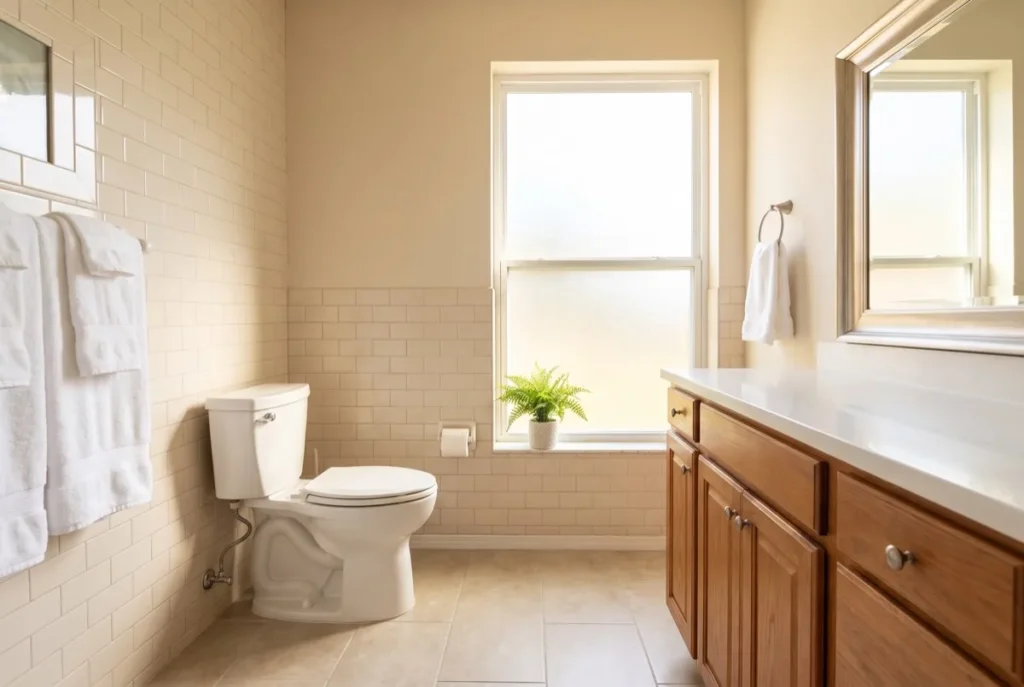
Toilet repair
A toilet gives you a small number of very different problems, and they are easy to mix up from the doorway. One runs and refills on its own. One will not clear. One rocks when you sit on it. One puts water on the floor near the base. From the outside they can look like the same annoyance, and the work behind each of them is not the same work.
The distinction we ask about on the callback is simple: is the water staying inside the tank and the bowl, or is it reaching the floor? That answer changes which plumber we route your toilet repair to and how soon it needs to move.
Say which bathroom, say whether it is the only toilet in the house, and say whether you have shut the supply valve behind it. If you are not sure the house has one, that is fine, and it is one of the first things the callback will walk through with you.
Sink repair, and what is underneath it
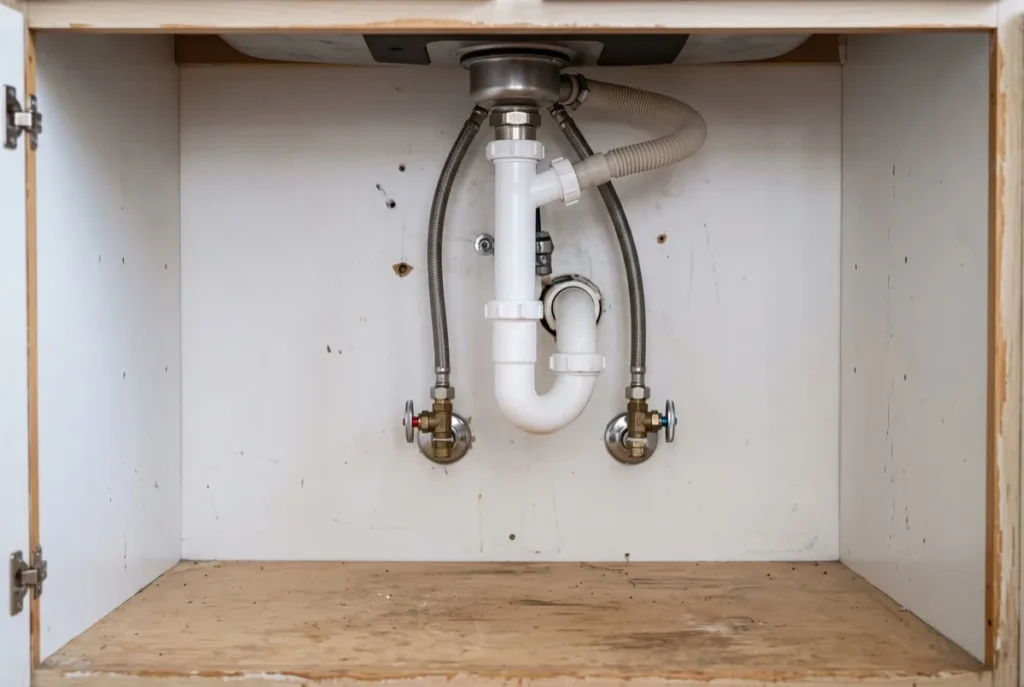
Sink repair covers the fixture and everything in the cabinet under it: the drain assembly, the trap, the supply lines, the shutoff valves, and the little pool of water that shows up on the cabinet floor and is almost never where the leak actually starts, which is why water arriving from somewhere no fixture is installed belongs to leak detection rather than to this page.
Two things are worth separating before anyone drives out. A sink that drains slowly is a different job from a sink that drips, and a kitchen sink usually carries a disposal into the conversation while a bathroom sink does not. If the water goes down but takes its time, that is likely drain work, and drain cleaning is where that belongs. If the unit under the kitchen sink is the one making noise, garbage disposal repair is the page for it.
Tell us which sink, whether it is dripping, draining slowly, or both, and whether anything under the cabinet is wet. We route it from there.
Faucet installation
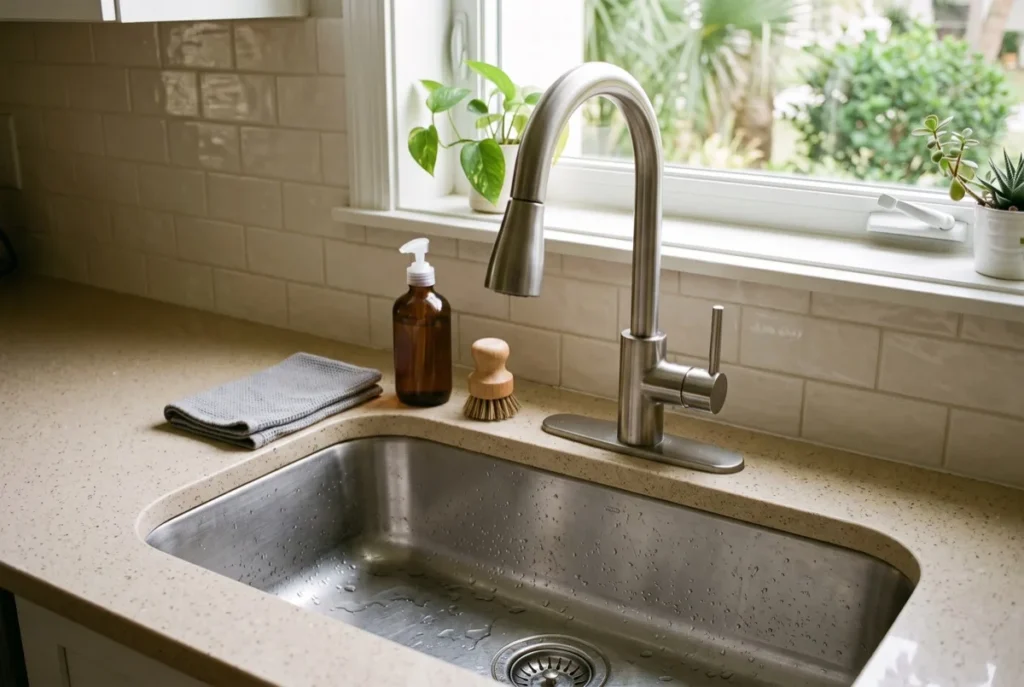
Faucet installation sounds like the simplest thing on this page and is the one most likely to turn into a second trip. The failure point is rarely the faucet. It is the shutoff valve that will not close, the supply line that will not seal again, or a deck with a hole count that does not match the fixture sitting in the box on your counter.
That is why the callback asks what you already have. How many holes the sink or deck is drilled for, whether the faucet you bought is single handle or widespread, whether it is kitchen or bath, and whether you already have the fixture or want the plumber to bring one. If you have not bought anything yet, say so, and say what you are trying to change.
Nothing about that conversation obliges you to buy the more expensive answer. It exists so that the person who shows up has the right parts on the truck.
Shower installation
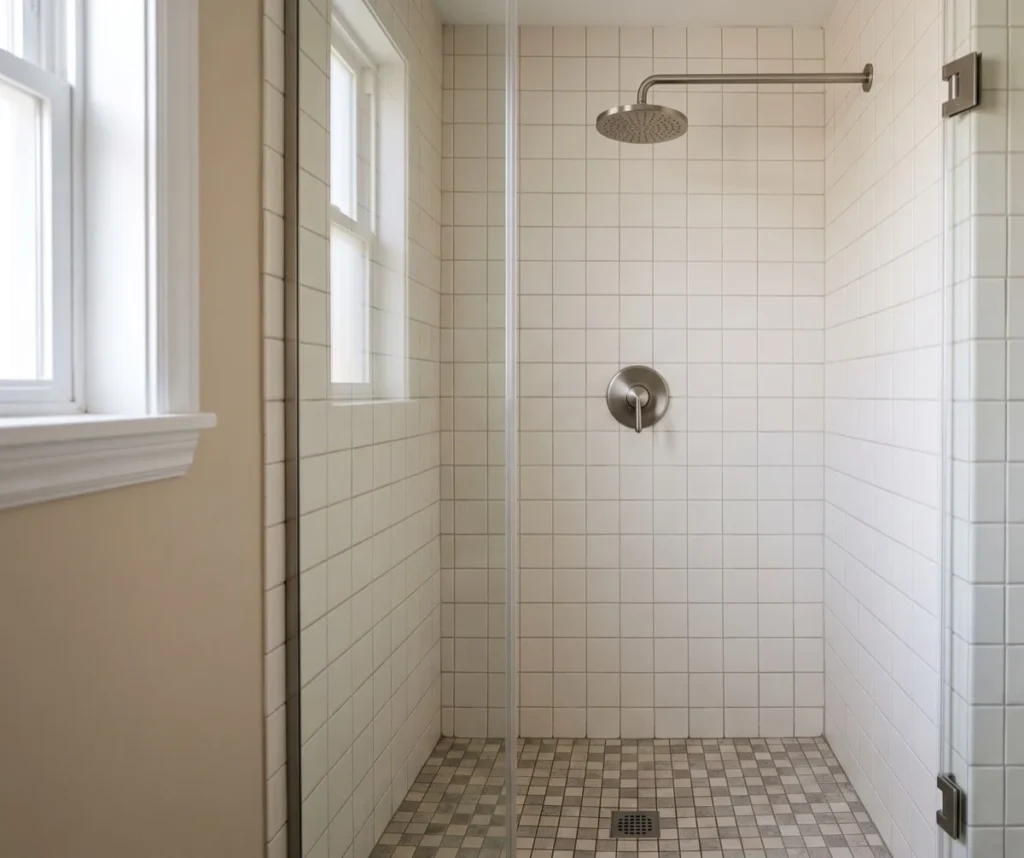
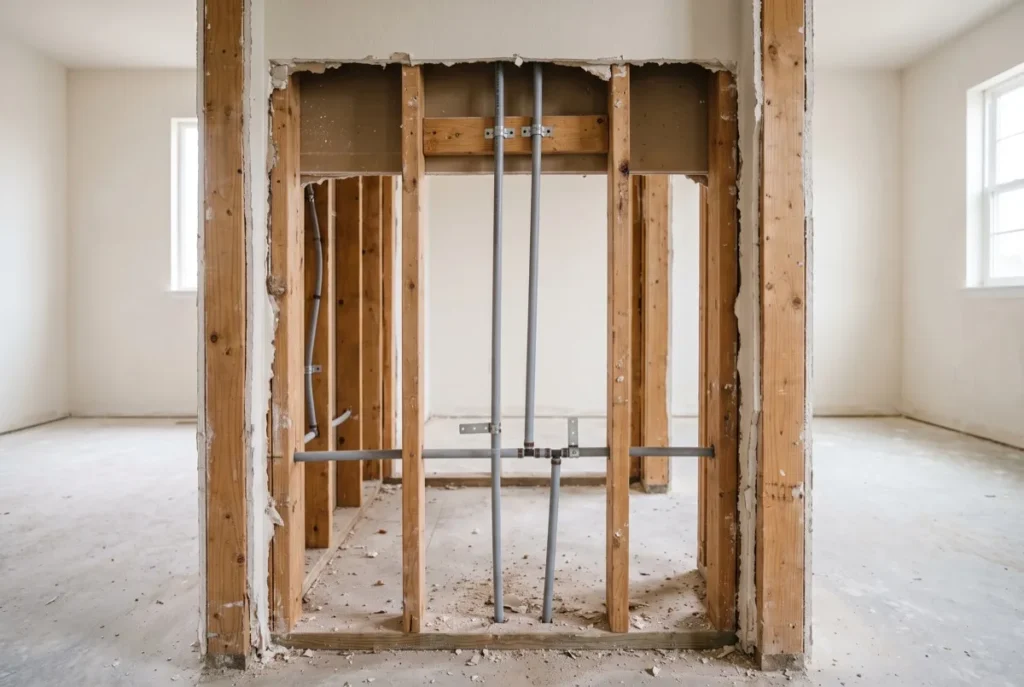
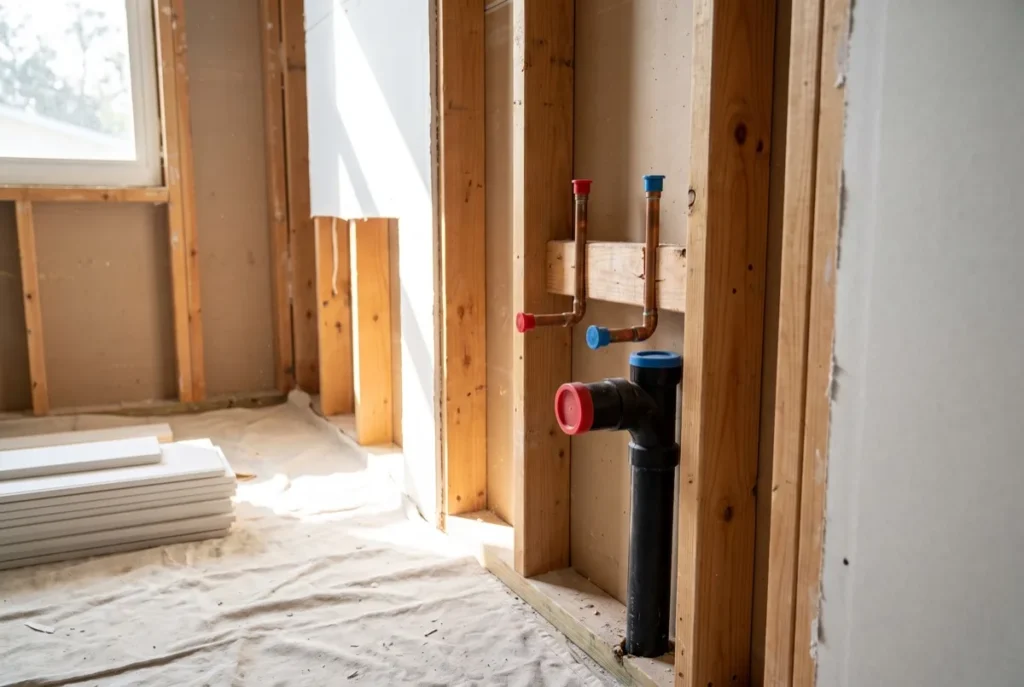
Shower installation is a range, not one job. On one end, a valve and a head going back into a wall that is already plumbed for it. On the other, a new shower in a room that has never had one, which means drain, supply, and a wall opened on purpose. Those two are priced, scheduled, and staffed differently by any plumber you talk to, and they are not the same request even though people describe both with the same sentence.
So the callback starts by asking where on that range you are. Is there a shower there now? Are you replacing a tub with one? Is the wall open already, or is it closed and tiled? Is anyone else in the project, like a tile setter or a general contractor, whose schedule the plumbing has to fit around?
Answer roughly. Nobody expects you to know what is behind the tile. The point is to send a plumber who came expecting the job you actually have.
Repiping the house
Repiping is the whole house, not one fixture, and it is usually a decision rather than a sudden failure. It shows up as a pattern instead of an event: the same line patched more than once, pressure that dropped and stayed down, discolored water at more than one tap, or a plumber who already told you the piping is the thing behind everything else.
Because repiping is a decision, the callback is a longer conversation than the rest of this page. It helps to know roughly when the house was built, whether the plumbing has been worked on before, whether the house sits on a slab, how many bathrooms are in it, and whether you are living in it during the work. Those answers change which plumber is right for it, and there is no reason for you to be guessing at them alone.
If what you actually have is one line failing rather than all of them, that is a different page. Water showing up where nothing is installed is leak detection, and it is worth ruling that out before anyone talks to you about the whole house.
Plumbing installation for a remodel or an addition
Plumbing installation is the work of putting plumbing somewhere it has never been. A powder room going into what used to be a closet. A kitchen island that needs a drain. A laundry moving to the other side of the house. An addition that has no water in it yet. It is planned work, it lands in the middle of somebody else’s schedule, and it usually has to happen at a specific point in the build rather than whenever a truck is free.
The callback for this one is about the shape of the project. What is going in, what room it is going into, whether there is already a contractor and a timeline, and whether the space is open or still intact. If a permit or an inspection is part of your project, say that too, so the plumber knows it before the first visit rather than after.
New water heater work as part of a build is its own page. Water heater installation covers a unit going somewhere the house never had one.
Free for homeowners
You do not pay CheckedCrew. Not to fill out the form, not for the callback, not for the match. What the plumbing work itself costs is settled between you and the professional who does it. We do not set that price, we do not quote it, and we do not take a cut of your invoice.
Where we work
CheckedCrew serves Orlando, Florida. If your property sits outside the city, put the ZIP code in the form anyway and we will tell you straight on the callback whether we can help with it.
What Orlando homeowners ask before they call a plumber