The signs of a leak you cannot see
A leak you can see is a repair. A leak you cannot see is a search, and it usually announces itself sideways, through something that has nothing obviously to do with water. Leak detection starts with the symptom you can name, not with the pipe you cannot reach.
These are the ones that bring people to this page:
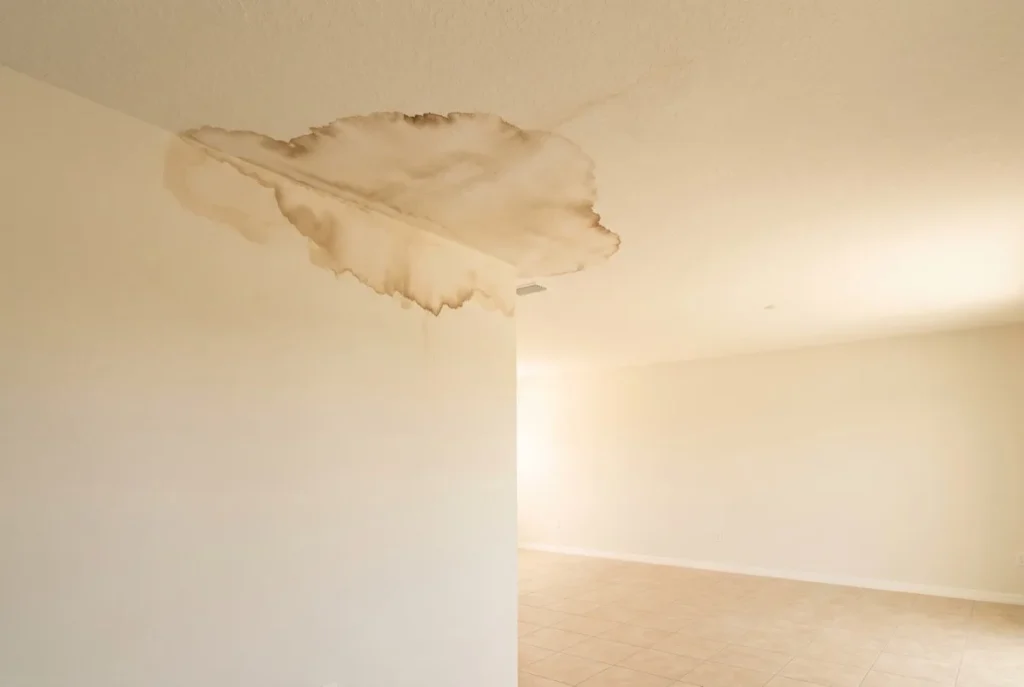
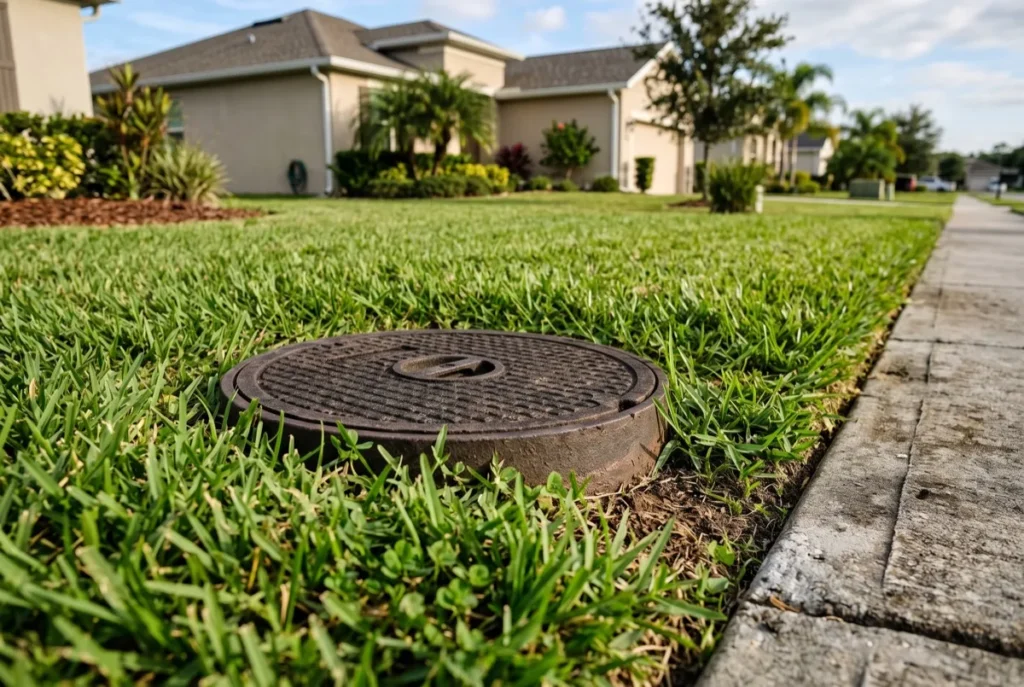
– The water bill moved and your habits did not. Nobody filled a pool, nobody moved in, nobody changed the irrigation, and the number went up anyway. – You can hear water running in a quiet house with every tap closed. – A patch of floor is warm, or a patch of carpet is damp at the edge and dries slowly. – A stain on a wall or a ceiling that gets a little bigger every week. – Paint that bubbles, baseboard that swells, or tile that has started to sound hollow. – A musty smell in one room that cleaning does not fix. – Water pressure that dropped and stayed down. – One strip of the yard that is greener, softer, or wetter than the rest of it.
There is one check you can run before anyone comes out, and it costs nothing. Turn off every fixture in the house, find the water meter, and look at the small dial or the leak indicator on it. If it is still moving with nothing running, water is going somewhere. That single observation is worth putting in the form, because it tells the professional a great deal before the first visit.
Leak detection is finding it, not fixing it
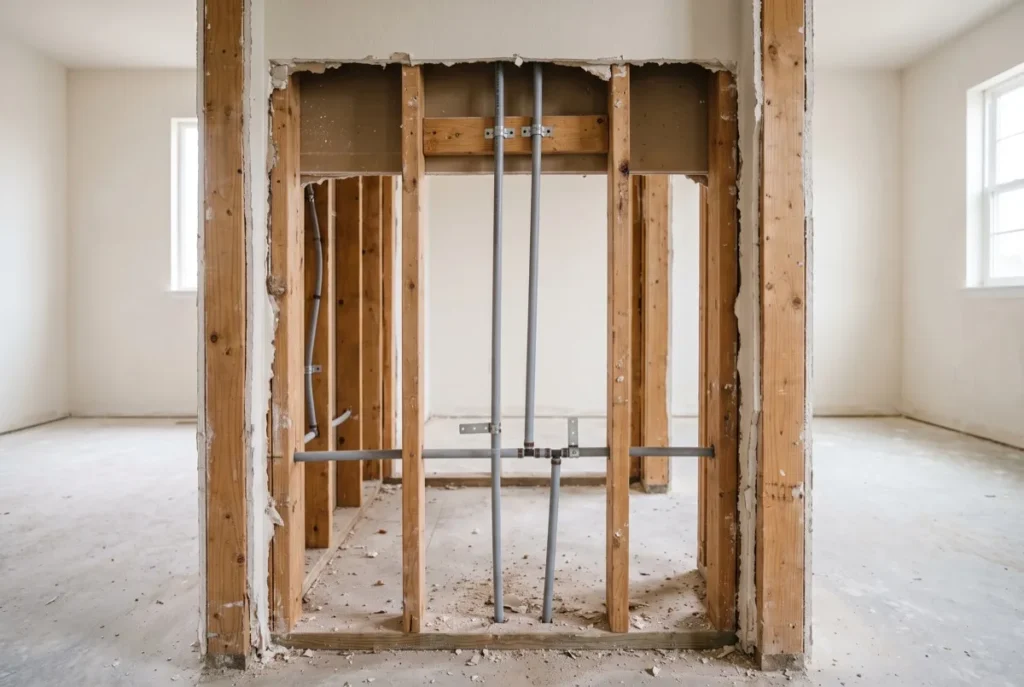
The reason leak detection is its own service, with its own name and its own page, is that locating a leak and repairing one are two different jobs that happen in that order. When the water is behind drywall, under tile, inside a slab, or four feet under the yard, the expensive part of the problem is not the fitting that failed. It is everything that gets opened looking for it.
So the order matters. Location first, so that whatever has to be opened is opened once, in one place, on purpose. A leak that has already made itself visible does not need this step at all. A leak that has only made itself expensive does.
What that means for you is that the first conversation is about narrowing, not about quoting. Where the house sits, what is under the floor, when the piping was last worked on, whether the wet thing is above you or below you. None of that requires you to have a theory. It requires you to describe what the house is doing.
We do not diagnose your leak on the callback, and you should be wary of anyone who does. What the callback does is get the description straight and get a professional moving toward it, with the state license record for that person already read.
Where the water is coming from decides who should look
Water travels before it shows up, which is why the wet spot is so rarely above the problem. Some of what people bring to this page turns out to belong to a different job entirely, and naming that early saves you a visit. Read the line that sounds like your house.
Water where nothing is installed. A bill that moved on its own. A warm floor. A line that let go. Those are this page, and the rest of it is below.
What is checked before anyone gets your job
Anybody can put “licensed and insured” on a truck. Florida keeps the real answer in a public database run by the Department of Business and Professional Regulation, and it is open to anyone who knows where to look. We look, every time, before a job leaves our hands.
We pull the record the state publishes for that one professional, and we read it as it stands. The method is deliberately narrow. We do not grade the professional, we do not speak for a trade as a whole, and we do not treat the four trades as one thing. We tell you what the record says. We do not tell you a record exists when it does not.
That check earns its keep on a page like this one. A hidden leak is the easiest kind of work to be sold badly, because the damage is behind a wall and you cannot see the before or the after any better than you could see the leak. Reading the record first does not make the diagnosis right, and we will not pretend it does. It removes one unknown from a situation that already has too many.
You can run the same search yourself. That is what a public record is for. We run it every time so that it is already done by the time you are talking to someone.
Slab leak repair
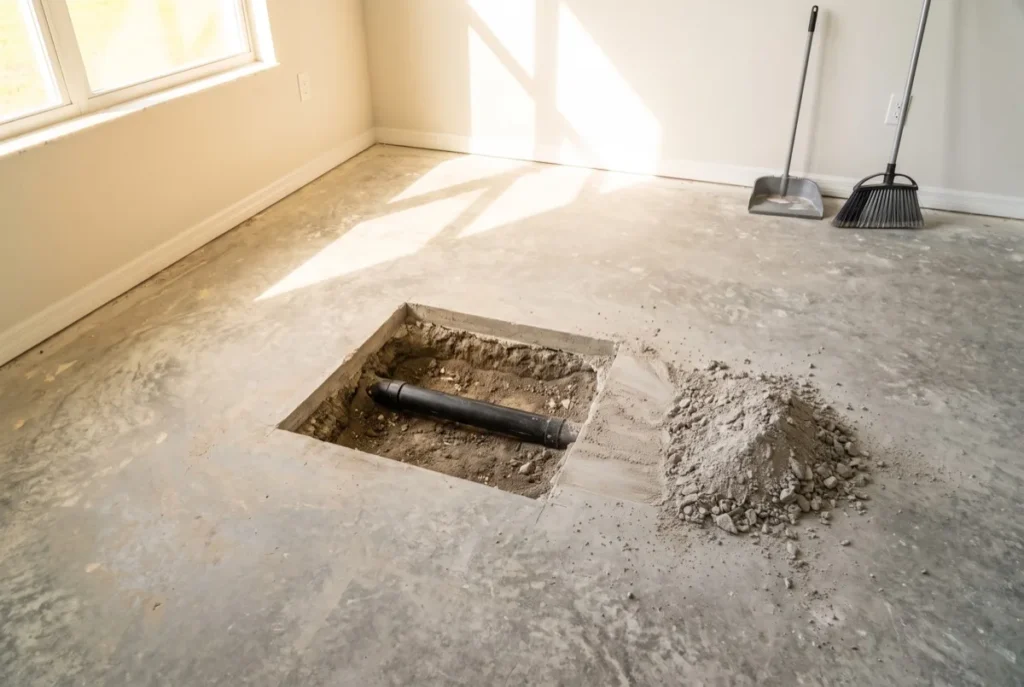
If your house sits on a concrete slab, some of its water lines run under that slab or inside it. When one of those fails, nothing drips anywhere you can look. The water goes into the ground or into the concrete, and what reaches you is indirect: a warm patch on the floor if it is the hot line, the sound of water running with everything closed, a bill that climbed for no reason, a floor that has started to move, or damp that appears at the edge of a room and keeps coming back after you dry it.
Slab leak repair is one of those jobs where the sequence is the whole thing. Nobody should be cutting concrete to go looking. The leak gets located first, and only then is there a real conversation about what to do with it. What that conversation contains is a plumber’s call after seeing the house, not a search result: repairing at the point of failure, rerouting the line so it no longer runs under the slab, or replacing the piping more broadly, which is repiping and belongs on the plumber page.
On the callback it helps to know roughly when the house was built, whether it is on a slab or a crawl space, whether the warm or wet spot moves or stays put, whether the plumbing has been worked on before, and whether the floor over it is tile, wood, or carpet. Answer roughly. Nobody expects you to know what is under your own floor.
Burst pipe repair
If a pipe has let go and water is moving right now, the form is not the first thing. Shut the water off at the main first, then come back and tell us. The main shutoff is usually where the supply enters the house or at the meter near the street, and finding it once, on a calm day, is the single most useful thing a homeowner can do for a future version of themselves.
Two more things before the description. If the water has reached a ceiling and the ceiling is sagging or holding weight, stay out from under it. And if water is anywhere near outlets, a panel, or a light fixture, do not touch any of it: that has stopped being a plumbing question and become an electrical one.
Burst pipe repair itself is the part that starts once the water is off. What the callback asks is short, because you are busy: where the pipe is if you know, whether the water is already shut off, what the water has reached, and whether someone can be at the property. Say it in whatever order it comes out.
Free for homeowners
You do not pay CheckedCrew. Not to fill out the form, not for the callback, not for the match. What the leak detection or the repair costs is settled between you and the professional who does it. We do not set that price, we do not quote it, and we do not take a cut of your invoice.
Where we work
CheckedCrew serves Orlando, Florida. If your property sits outside the city, put the ZIP code in the form anyway and we will tell you straight on the callback whether we can help with it.
What Orlando homeowners ask about a leak they cannot find