Start with what the door is doing
Almost everything that goes wrong with a garage door announces itself the same way: the door stops moving, and a car is on the wrong side of it. What it announces, though, is not always the same problem. The fastest route to the right garage door repair in Orlando is to describe the behavior instead of naming the part. Read the line that sounds like your garage and go where it points. If two of them sound like your garage, say both on the form and we will sort it on the callback.
Springs, cables, track, and panels are handled on this page. Keep reading.
What we check before anyone gets your job
Anybody can print “licensed and insured” on the side of a van, and standing in your driveway with the door stuck you have no way to tell. Florida keeps its own answer in public. The Department of Business and Professional Regulation runs a record database that anyone can search, and that is where we look — for the individual professional, one at a time.
So we pull what the state publishes about that one person, we read it as it stands, and we do it before your job leaves our hands, never after. Then we tell you what the record says.
The method is deliberately narrow, and here it is worth being blunt about what it is not. We do not grade the professional. We do not speak for a trade as a whole, and we do not tell you what any trade is or is not required to hold. We do not treat four different trades as one thing. We tell you what the record says, and we do not tell you a record exists when it does not.
You can run the same search yourself. That is what a public record is for. We run it every time so that it is already done by the time you are talking to someone.
Garage door spring repair
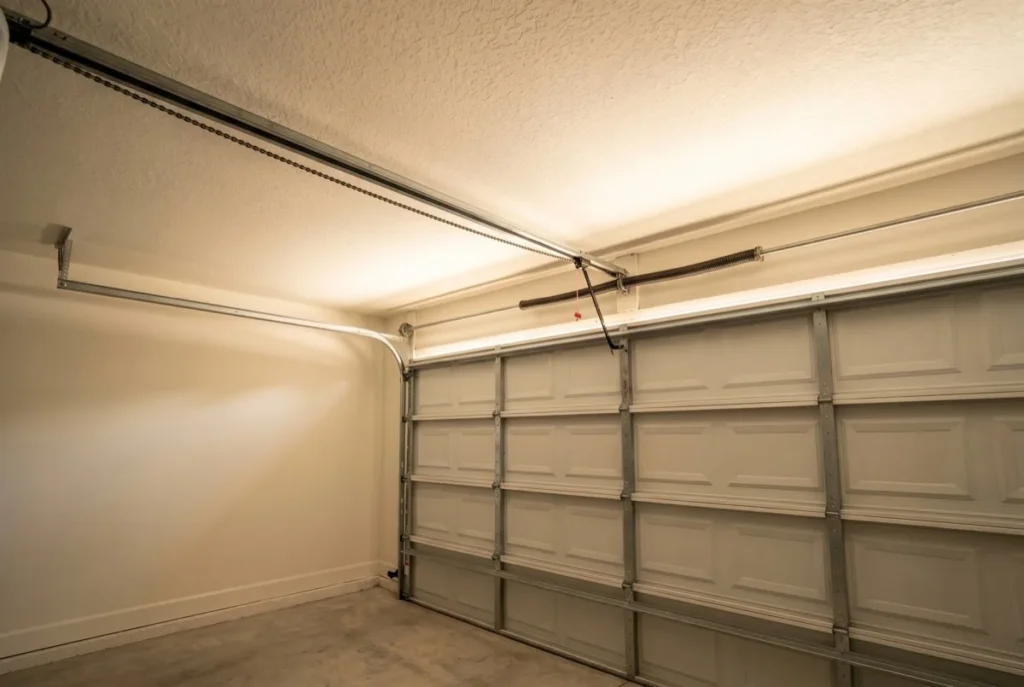
The springs are what actually lift the door. The opener only steers a load the springs have already balanced, which is why a door with a healthy spring can be raised by hand with two fingers and a door with a failed one feels like furniture. Most residential doors carry either a torsion spring mounted on a bar above the opening or a pair of extension springs running along the tracks at the sides, and garage door spring repair means different work depending on which one is over your head.
The symptoms are consistent. The door goes up a few inches and stops. It comes down faster than it should. It stays up only if you hold it. The opener strains against a load the springs are no longer balancing. A door that used to feel weightless suddenly feels like it weighs what it actually weighs, because it does.
Springs are also a matched set with a service life, so the useful thing to tell us on the callback is not just what failed but how old the door is, how many times a day it runs, and whether anything was replaced before. Those answers change what the professional brings.
A broken garage door spring
A broken garage door spring usually introduces itself with a bang loud enough to be heard inside the house, and after that the door simply does not come up. If you look at the bar above the opening you may see a clean gap in what used to be one continuous coil. If your door uses side springs, one of them may be hanging. The opener will often still run, and the door will still barely move, which is the moment to stop pressing the button.
This is the one job on this site where the honest advice is to stop.
A garage door spring stores an enormous amount of energy, and it holds a dangerous amount of it whether it is intact or already broken. Winding bars slip. Brackets under load do not care how careful you are being. That is why the work is not a weekend project: people are seriously hurt doing it, and some are killed. So leave the door where it is. Do not try to release or unwind the tension, do not take the door off its brackets or the cables off their drums, and do not keep running the opener to force it. If the car has to come out, a garage door can usually be disconnected from the opener and lifted by hand — but with a failed spring it will be carrying its full weight, which is exactly the situation this paragraph is asking you not to fight alone.
Tell us on the form that the spring is what went, and tell us whether a car is shut in. Then leave it alone.
Garage door cable repair
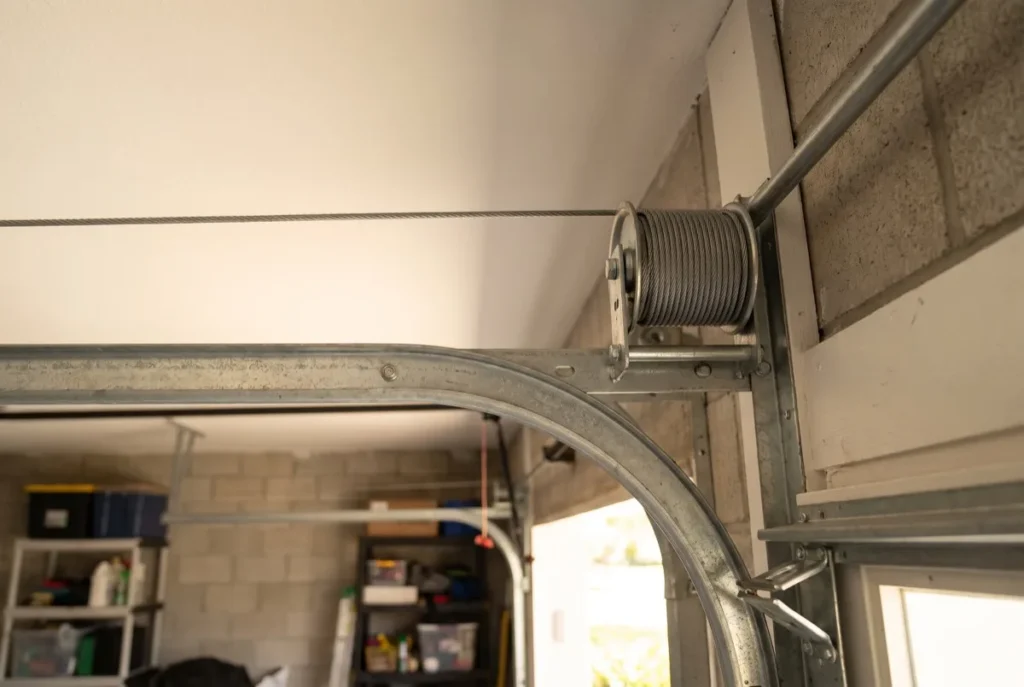
The cables are the two steel lines that carry the door’s weight from the spring system down to the bottom of the door. They are the quietest part of the assembly right up until they are not. Garage door cable repair usually starts with one of three sights: a cable hanging slack where it used to be taut, a cable that has jumped off its drum and wound itself into a bird’s nest at the top corner, or a door that now goes up with one side climbing faster than the other.
A frayed or snapped cable is worth reading as part of a chain. A spring that let go, a drum that loosened, a roller that bound up, a bottom bracket that shifted — each of those changes how the door’s weight reaches the cable, so the useful call is the one that looks at the whole assembly and not only at the line that broke.
What helps on the callback: which side is loose, whether the door is still level, whether it still moves at all, and whether you have already tried to run it since you noticed. Do not keep cycling the door to test it. A crooked door under an uneven load is how a cable problem becomes the next section of this page.
A garage door off track
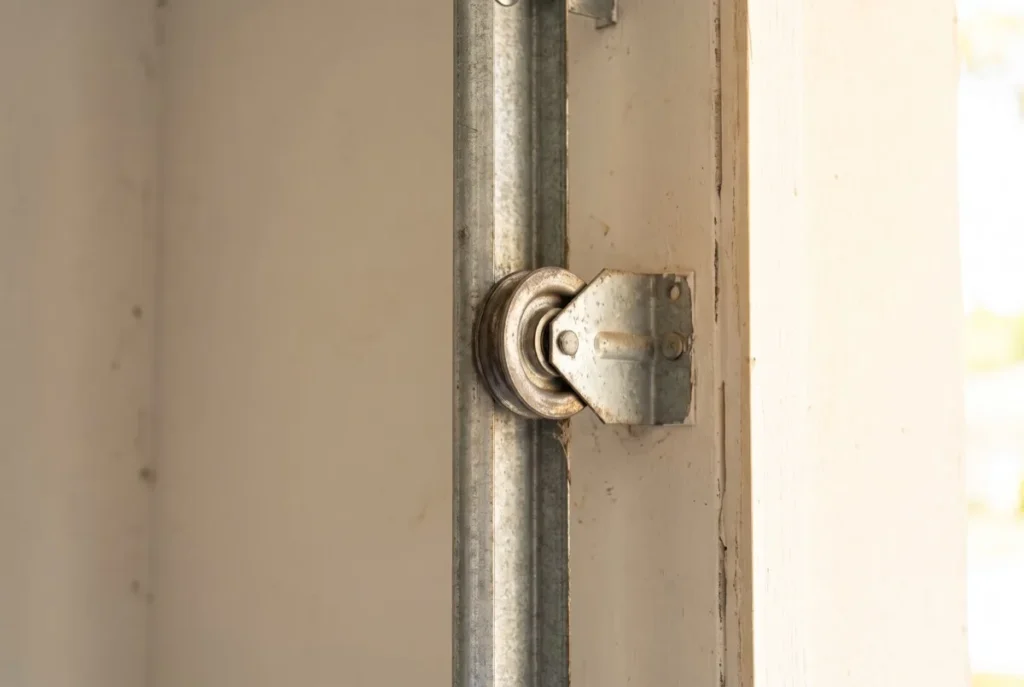
A garage door off track is the one you can see from the driveway. A roller has left the rail, the door sits crooked in the opening, one corner is pinched against the frame, and the whole thing has the wrong shape. It happens after a car bumps the bottom section, after a cable goes slack on one side, after a roller or a hinge gives up, or after an obstruction gets caught under the door on its way down.
Running the opener once more will not seat it. A door that is off track is being pulled by a system that no longer has it square, and one more cycle is how a bent rail becomes a bent rail plus a damaged panel plus a cable off its drum. Unplug the opener if you can reach it safely, and leave the door where it stands.
Tell us how it got there if you know, whether the door is currently open, closed, or stuck halfway, and whether a vehicle is on the wrong side of it. If it is the opener that keeps driving the door into the jam — the unit reversing, straining, or ignoring the sensor — say that too, and read the opener page, because that part is garage door opener repair rather than the door itself.
Garage door panel replacement
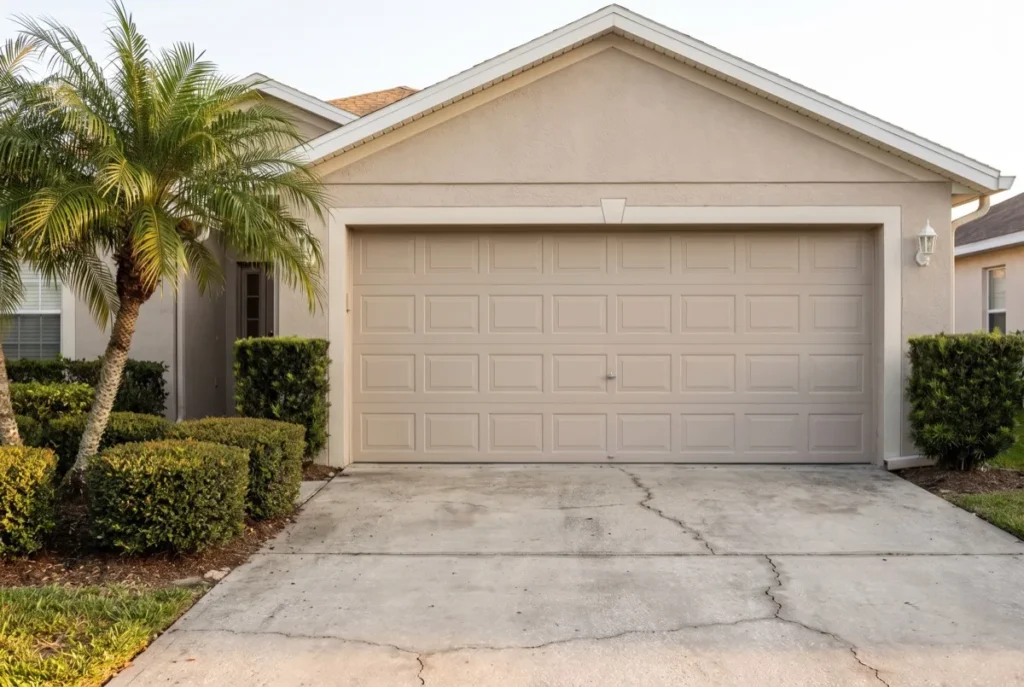
A dented, cracked, or bowed section is the damage a bumper leaves. Garage door panel replacement swaps the affected section instead of the door, and it is worth asking for when the rest of the assembly is sound: the tracks are straight, the springs are working, and one section took the hit.
Two honest limits are worth knowing before anyone comes out. The first is matching. Doors are made in runs, with a stamped pattern and a factory finish, and a section for a door of a certain age may be available, may be available in a slightly different profile, or may be discontinued. That is a question for the professional standing in front of your door with the model information, not for a web page. The second is what the damage did on its way in. A hit hard enough to fold a panel can take a roller, a hinge, or the track’s alignment with it, which is why panel work starts with a look at the whole door.
If the damage runs across several sections, if the door is old enough that panels are no longer made for it, or if you have already decided you would rather have a different door than the one you have, then what you want is a new door rather than a section, and that is garage door installation.
Free for homeowners
You do not pay CheckedCrew. Not to fill out the form, not for the callback, not for the match. What the garage door work itself costs is settled between you and the professional who does it. We do not set that price, we do not quote it, and we do not take a cut of your invoice.
Where we work
CheckedCrew serves Orlando, Florida. If your property sits outside the city, put the ZIP code in the form anyway and we will tell you straight on the callback whether we can help with it.
What Orlando homeowners ask when the door stops