Find the section that sounds like your house
A charger in the garage, an outlet by the kitchen sink, and a breaker that will not stay on are different jobs, but they are the same system, and the fastest way to reach the right electrician in Orlando is to say what is happening rather than to guess what the trade calls it.
Read the group that sounds like your house and go to that section. If two of them sound like your house, say both on the form and we will sort it on the callback.
Encaminhamento fora do ofício: If what trips the breaker is the disposal under the kitchen sink, garbage disposal repair is the page for that.
What we check before an electrician gets your job
Anybody can print “licensed and insured” on the side of a van, and standing in your driveway you have no way to tell. Florida keeps the real answer in public. The Department of Business and Professional Regulation runs a license database that anyone can search.
So we look. We pull the record the state publishes for that one professional, we read it as it stands, and we do it before your job leaves our hands, never after. The lookup is the step that comes first.
The method is deliberately narrow, and it is worth being clear about what it is not. We do not grade the professional. We do not speak for the trade as a whole. We do not interpret the state’s categories for you, and we do not decide who is entitled to what. We tell you what the record says for that one person, and we do not tell you a record exists when it does not.
Electrical work is not a place to guess, and it is not a place to take a truck’s word for anything. If you are hiring an electrician in Orlando, that record is the first thing we pull, and you can run the same search yourself. That is what a public record is for. We run it every time so that it is already done by the time you are talking to someone.
Electrical panel upgrade
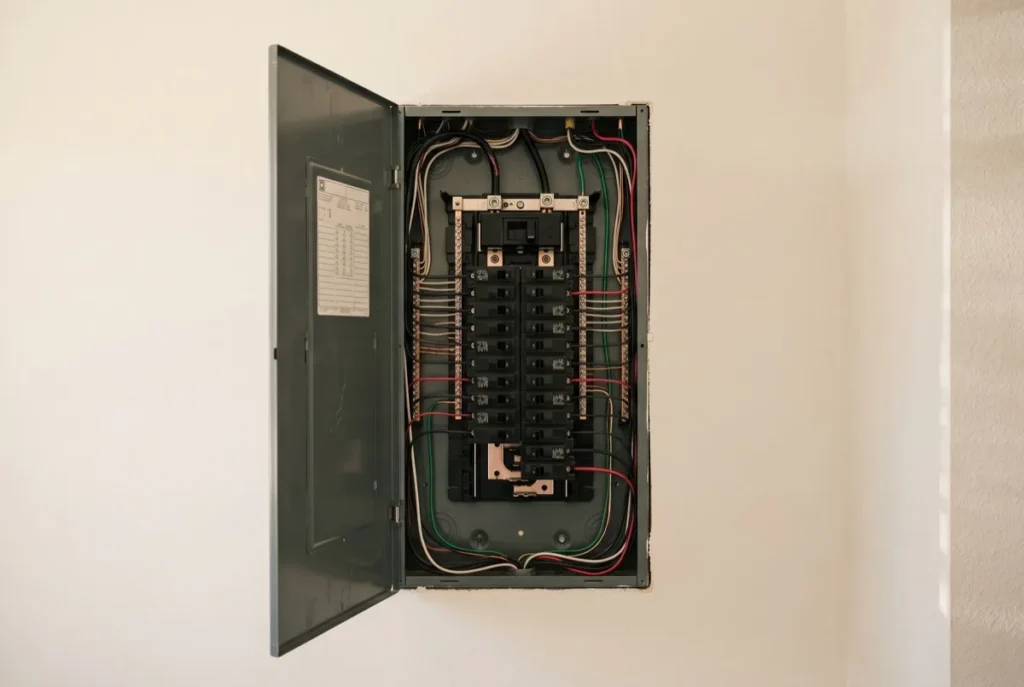
The panel is where the electricity arriving at your house gets divided up, and it was sized for the house as it was when somebody installed it. An electrical panel upgrade is what happens when the house has moved on and the panel has not: more rooms, more appliances, more things that draw hard at the same moment.
It usually announces itself in one of three ways. Lights dip when something big starts up. You are adding load the house never had, like a range, a dryer, an air handler or a charger in the garage. Or an electrician has already looked at the panel and told you it is the thing standing behind everything else on your list.
Whether the panel actually needs replacing, and at what size, is a call made by the electrician standing in front of it. It is not a call a website should be making for you, and we do not make it. What the callback does is gather what that person will ask anyway: roughly when the house was built, what the number on the main breaker is if you can read it, what you are adding, and whether anything else is planned for the next year, so it gets counted once instead of twice.
Circuit breaker replacement
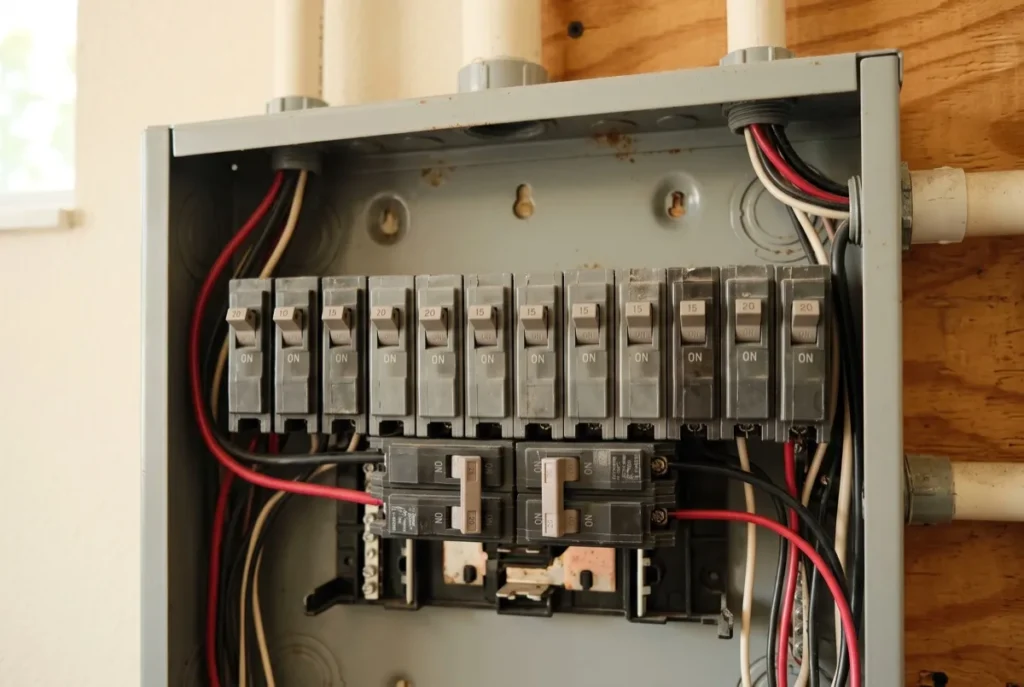
A breaker that trips is doing exactly what it was put there to do. A breaker that trips again and again is telling you something, and that is where circuit breaker replacement gets interesting, because replacing the breaker is sometimes the answer and sometimes the thing that hides the answer. The same goes for a breaker that will not reset, one that feels warm, or one that has started tripping on a circuit that was fine for years.
That is why the callback asks about the pattern rather than the part. Which breaker, if it is labeled. What is running on that circuit when it goes. Whether it trips with a specific appliance or with nothing on at all. Whether it started after something changed in the house. Those answers tell the electrician whether the breaker is the problem or the messenger, before anyone drives out.
One case is worth naming, because it is not electrical work at all: if what trips the breaker is the disposal under the kitchen sink, garbage disposal repair is the page for that one, and it is worth ruling out before anyone talks to you about the panel.
House rewiring
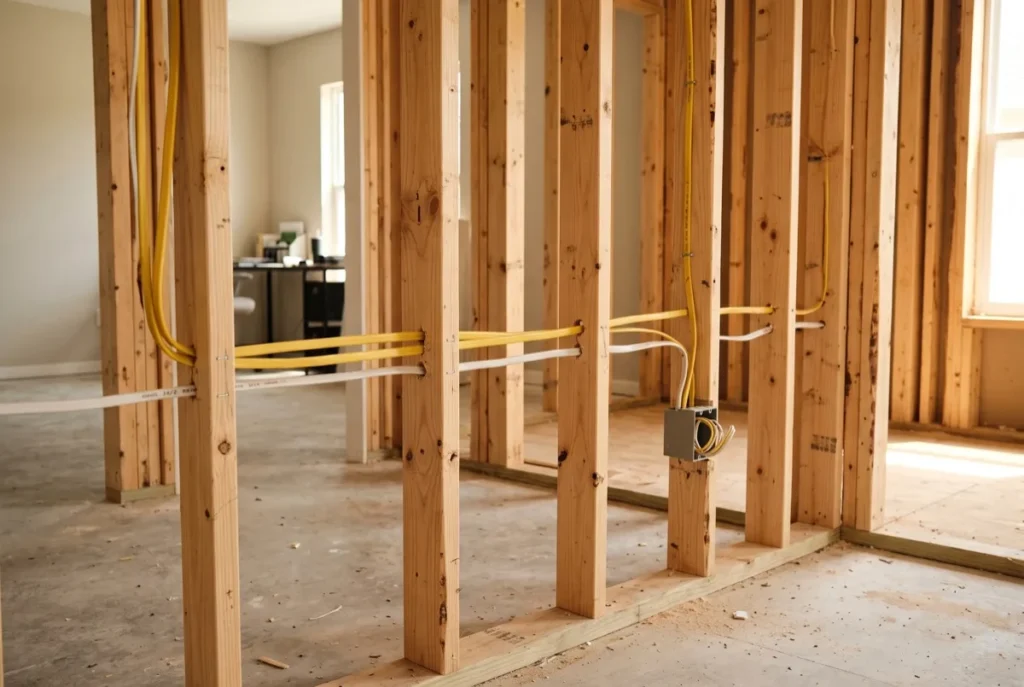
House rewiring is the whole house rather than one circuit, and like anything at that scale it is usually a decision rather than a sudden failure. It shows up as a pattern instead of an event: two-prong outlets in most of the rooms, a circuit that has been extended more than once to reach somewhere it was never meant to reach, work that was clearly done by different hands in different decades, or an electrician who has already told you the wiring is behind the list of small problems you keep paying to fix.
Because rewiring is a decision, the callback is a longer conversation than the rest of this page. It helps to know roughly when the house was built, whether it has been rewired or added onto before, how many rooms are involved, whether you are living in it during the work, and whether anything else is already planned for the house this year.
If what you actually have is one circuit failing rather than all of them, that is a different conversation and it starts earlier on this page, at the breaker or at the panel. There is no reason to price out a whole house before ruling out a single circuit.
GFCI outlet installation
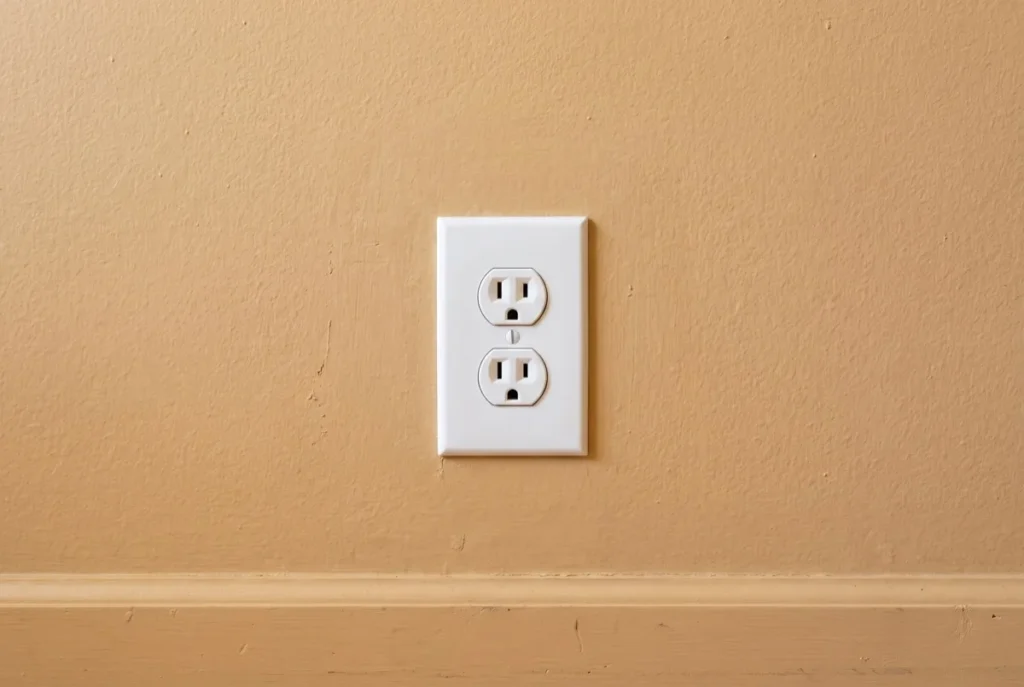
A GFCI outlet is the one with the little test and reset buttons on its face. It watches the current going out and the current coming back, and when those two stop matching it cuts power rather than waiting to find out why. GFCI outlet installation is putting that outlet where water and electricity share a room: kitchen counters, bathrooms, the laundry, the garage, outdoors, anywhere near a pool.
Whether your particular house needs one in a particular spot is a call for the electrician who sees the room, and it is not one we make from here. What the callback asks is practical: which room, whether there is already an outlet in that spot, whether it already has test and reset buttons, and whether you are adding one or replacing one that stopped holding.
That last one is worth spelling out. An outlet that trips the moment you reset it, or one that will not reset at all, is not necessarily a broken outlet. It may be doing its job about something further down the circuit, and that is worth saying on the form.
Generator installation
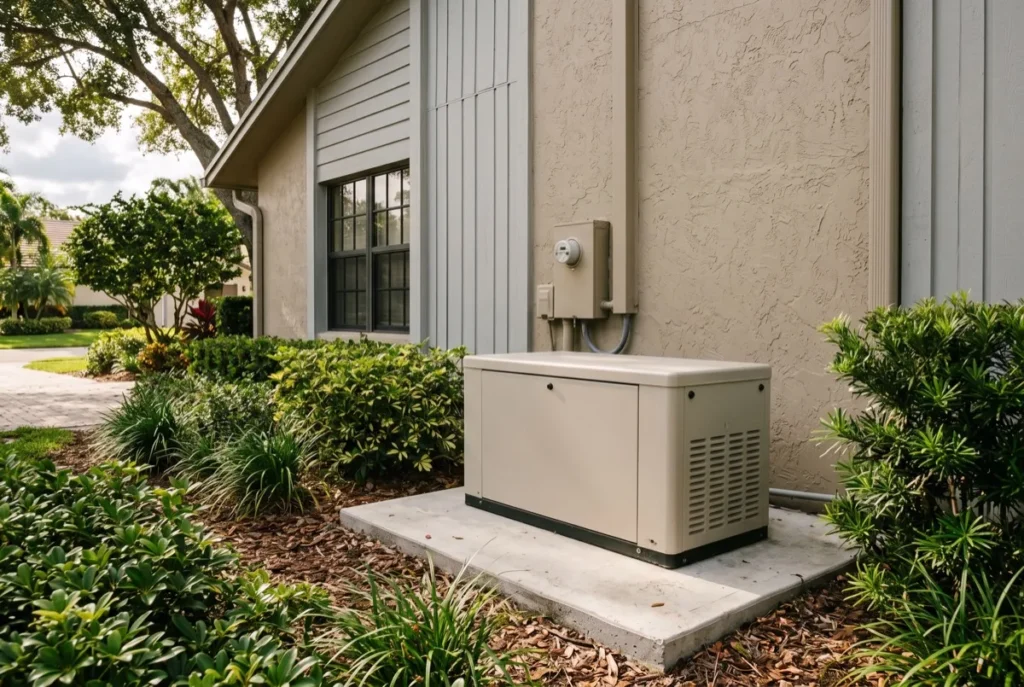
In Florida nobody has to explain why a house has a generator. Generator installation is planned work, though, and planned work is not something you start on the day you need it. The right time to have this conversation is a quiet one.
The first question is scope, and it is the one that changes everything after it: the whole house, or a handful of circuits that matter most, like the refrigerator, a well pump, a window unit and enough light to live by. The second is what you already have. Some people call with a unit sitting in the garage already. Some are starting from nothing and want to know what the question even is.
From there the callback covers the practical shape of it. Whether there is gas at the property or the fuel has to be stored. Where the equipment could sit. What kind of transfer arrangement you have in mind, if you have thought about it at all. And whether the panel is part of the conversation, because an electrical panel upgrade can turn out to be part of a generator project, and the callback is where that surfaces.
EV charger installation
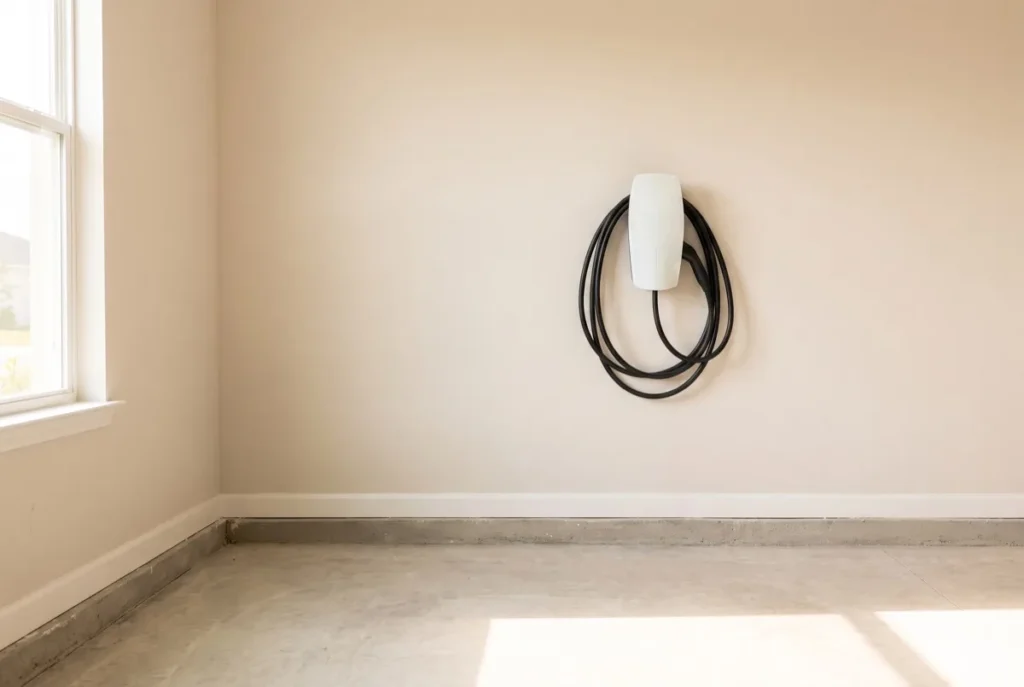
With EV charger installation the car is the easy part. The question is the house: how far the parking spot is from the panel, what the run between them would have to cross, and whether the panel has room for the circuit the charger wants. Two identical cars in two identical garages can be two very different jobs for that reason alone.
The callback asks what the electrician will ask. Which car, or which connector if you know it. Where you park and where the panel is, roughly, in relation to each other. Whether the garage is attached or detached. Whether you have already bought the unit or want the electrician to talk it through with you first. And whether anyone has told you the panel is tight, because if it is, an electrical panel upgrade may be sitting inside this project whether you planned it or not.
If you are still deciding and have not bought a car yet, say that too. It is a better moment to ask than the week the car arrives.
Light fixture installation
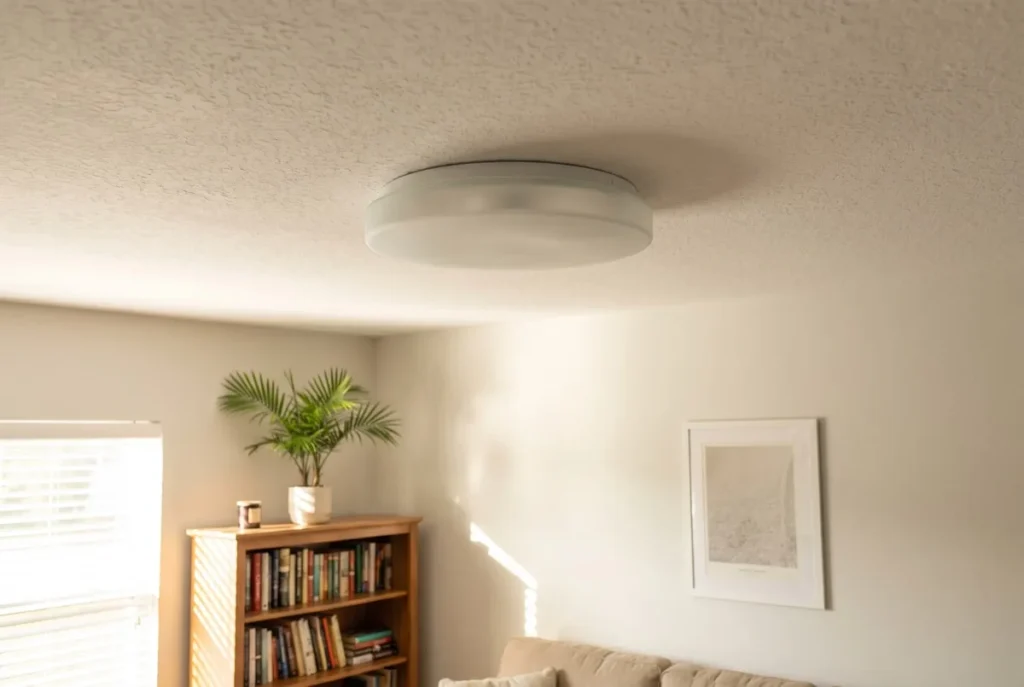
Light fixture installation splits cleanly in two, and the split matters more than the fixture does. Replacing something that is already there is one job. Putting light where the ceiling has never had any is another one, because it means a box, a circuit and a switch that do not exist yet.
So the callback starts there. Is there a fixture in that spot now, or a blank ceiling. How many are we talking about, one or several. How high is the ceiling, which decides whether this is a step ladder or something else entirely. Do you already have the fixture, or are you still choosing. And is a switch or a dimmer part of what you want changed, because that is wall work, not ceiling work.
Answer roughly. Nobody expects you to know what is above the drywall. The point is that the electrician arrives expecting the job you actually have.
Electrical inspection
Electrical inspection is the one item on this page that usually starts with somebody else. A buyer asks for it. A seller gets ahead of it. A company you are insuring with asks for it. A lender asks for it. Or you are about to buy a house you already like and want to know what you are buying before you love it.
Who is asking changes what is useful, so that is the first thing the callback asks. Who asked, what exactly they asked for, whether they put it in writing, and whether there is a date attached to it. Bring the wording if you have it, even if it makes no sense to you. The wording is usually the most specific thing anyone gives you in this process.
Two things we do not do, and it is better to say them here than to let you find out later. We do not perform the inspection, and we do not decide whether what comes back satisfies whoever asked you for it. What we do is put you in front of an electrician whose license record we have already read in the state’s public database, which is a reasonable thing to want from the person whose name ends up on that paperwork.
Free for homeowners
You do not pay CheckedCrew. Not to fill out the form, not for the callback, not for the match. What the electrical work itself costs is settled between you and the professional who does it. We do not set that price, we do not quote it, and we do not take a cut of your invoice.
Where we work
CheckedCrew serves Orlando, Florida. If you are looking for an electrician in Orlando, Florida, this is the page for it. If your property sits outside the city, put the ZIP code in the form anyway and we will tell you straight on the callback whether we can help with it.
What Orlando homeowners ask before they hire an electrician