Installation, replacement, or repair: which one you actually have
Three different jobs share the words “water heater,” and they are not interchangeable. The thing that tells them apart is not the equipment you are looking at online. It is what your house has right now, at the spot where the hot water is supposed to come from.
The third line is what the rest of this page is about. A water heater installation puts hot water somewhere the house did not have it, or changes the kind of appliance that makes it, and both of those are projects with a plan rather than a bad morning. If you read all three lines and still are not sure which one is yours, write what you see on the form and say you are not sure. That is a normal answer and the callback exists partly to settle it.
What we check before anyone gets your installation
Anybody can print “licensed and insured” on the side of a van, and standing in your driveway you have no way to tell. Florida keeps the real answer in public. The Department of Business and Professional Regulation runs a license database that anyone can search, one professional at a time.
So we look. We pull the record the state publishes for the individual who would be doing your work, we read it as it stands, and we do it before your job leaves our hands, never after. Nobody is given your job until we have read their record.
The method is deliberately narrow, and it is worth being clear about what it is not. We do not grade the professional. We do not speak for a trade as a whole. We do not treat four different trades as one thing. We tell you what the record says, and we do not tell you a record exists when it does not.
You can run the same search yourself. That is what a public record is for. We run it every time so that it is already done by the time you are talking to someone about your project.
Hot water where the house never had it
The most common version of this project is not an appliance dying. It is a room that is about to exist. A bathroom going in over the garage. A garage becoming a workshop with a sink in it. A mother-in-law suite at the back of the lot. A laundry moving to the other end of the house. An outdoor kitchen. A far bathroom that has always run cold for a full minute before anyone gets in.
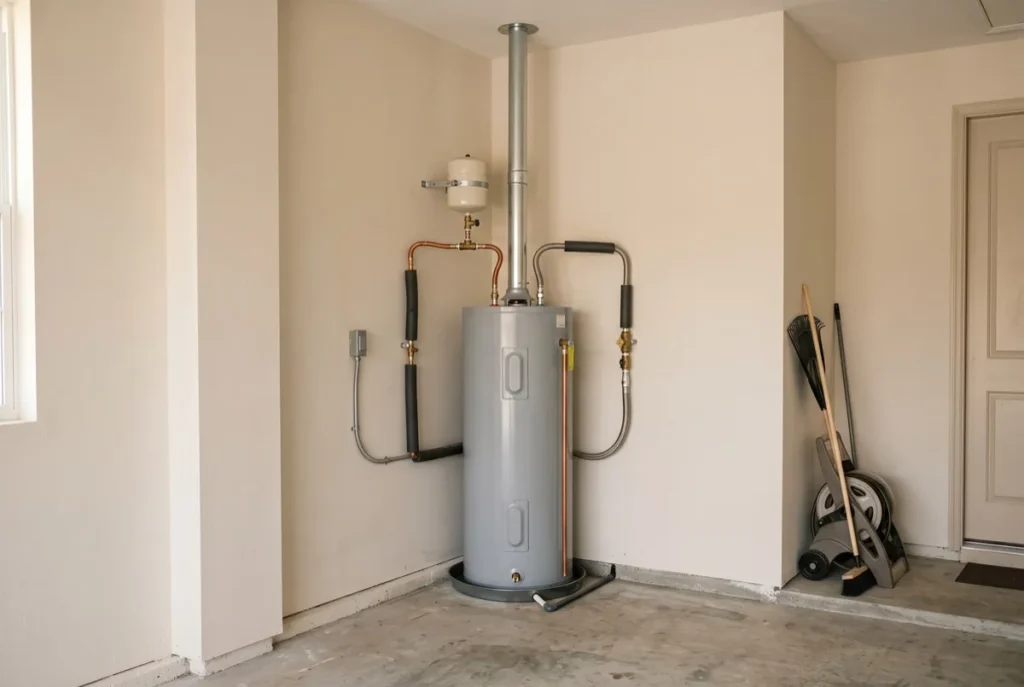
In every one of those, the appliance is the last thing that happens. Before it there is a route to figure out: where a unit can physically sit, what feeds it, how it breathes if it burns anything, where the water goes if the tank ever weeps, and whether the point where you want hot water is far enough from the source that it deserves its own unit rather than a longer run. That is the part of a water heater installation that decides the day, and it is the part that changes house by house on the same street.
If the same remodel also needs supply and drain lines run to a room that never had them, that is a broader job than this page: plumbing installation is covered on the plumber page, and the two usually travel together on the same project.
Going from a tank to tankless
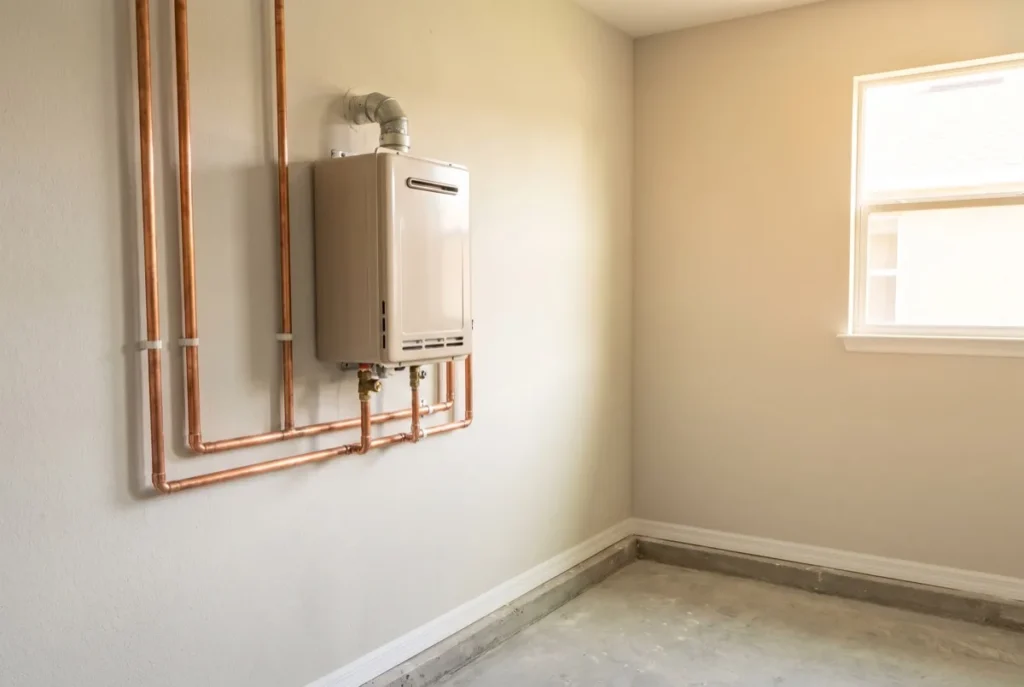
Changing the kind of appliance is an installation even when the old one is standing right there, and that surprises people. A tankless unit does not simply drop into the footprint of a tank. It is mounted rather than set down, it usually wants a different path to the outside if it burns gas, an electric one asks a different question of the panel and the service, and condensate has to go somewhere. Very little of what served the old tank serves the new unit, which is why the work is closer to a new installation than to a swap.
None of that is an argument for or against tankless. That call belongs to a professional who has stood in the room, looked at what feeds the spot, and told you what your particular house would need. It is not a call this page makes for you, and it is not one a spec sheet makes either.
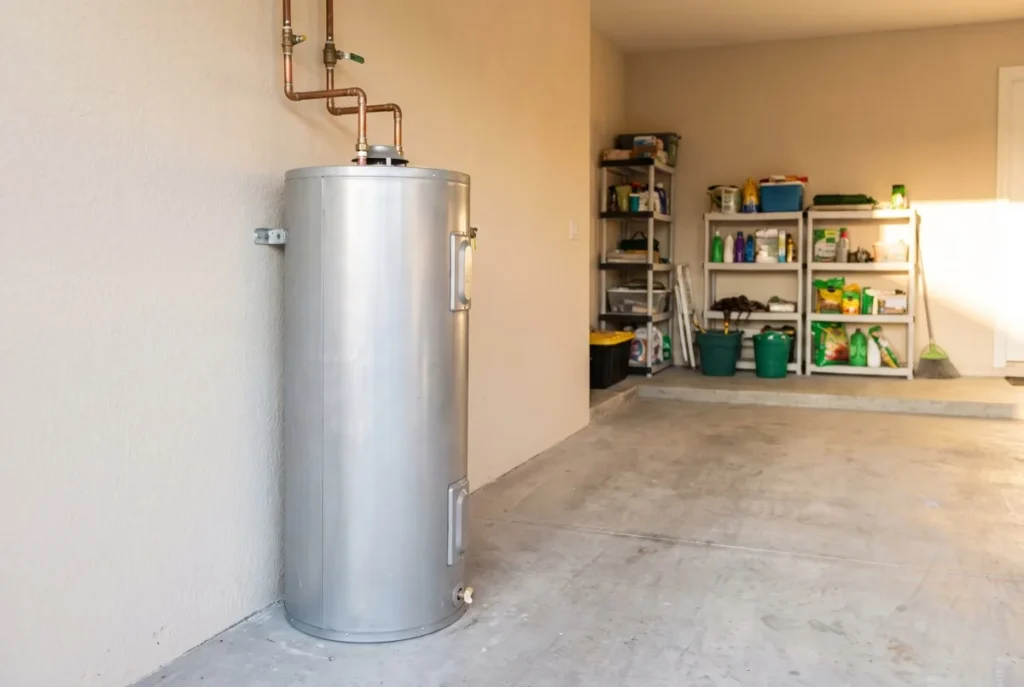
What decides which page you are on is narrower: if a tank is coming out and a tank of the same kind is going back in, that is water heater replacement and it has its own page. If what goes back in is a different animal, this is the installation, and it is worth describing the current setup on the form so the callback starts from the house you actually have.
The unit is the easy part
Choosing a model is the part of this project with the most information available and the least risk in it. Specifications are published, capacities are printed on the box, and you can read about any of it for an afternoon before you decide anything. That research is useful and nobody should talk you out of it.
The part you cannot research is what stays behind the wall afterward. Where the unit sits, how it is anchored, how it vents, what feeds it, how it drains, and whether the person who put it there was someone the state has a current record for. You can inspect a box on a pallet. You cannot inspect that from the hallway six months later, which is exactly why it is the part we look up before your job goes anywhere.
What the callback asks about a new water heater installation
None of these are quiz questions and none of them have to be answered exactly. Rough answers make the first visit land better, and “I don’t know” is a real answer to every one of them.
– Which room, and where in that room, is the hot water supposed to end up. – Whether the spot has anything there today, or is bare. – Gas or electric, if you already know which one the house is set up for. – Whether the space is open right now or already closed and finished. – Whether anyone else is on the project with a schedule the work has to fit around, like a contractor or a tile setter. – How many bathrooms and fixtures would be drawing from the unit once it is in. – Whether you have already bought anything, or want the professional to bring it.
Say those on the callback and the person who shows up arrives expecting the project you have rather than the one that is most common.
Permits and inspections: ask on the first call
Whether a permit or an inspection applies to your project is decided by your local building department, not by CheckedCrew and not by this page. It is a fair question, it is a common one for work of this kind, and the right moment to raise it is the first conversation with the professional rather than the last one.
So raise it. Ask whether a permit applies to what you are doing, who pulls it, and whether an inspection is part of calling the job finished. A professional who takes that question in stride is telling you something useful about how they work.
Nothing on this page says a permit is handled for you.
Free for homeowners
You do not pay CheckedCrew. Not to fill out the form, not for the callback, not for the match. What the installation itself costs is settled between you and the professional who does it. We do not set that price, we do not quote it, and we do not take a cut of your invoice.
Where we work
CheckedCrew serves Orlando, Florida. If your property sits outside the city, put the ZIP code in the form anyway and we will tell you straight on the callback whether we can help with it.
What Orlando homeowners ask before installing a water heater