Which symptom matches your house
A water heater fails in a handful of recognizable ways, and water heater repair starts with naming which one you are looking at. You do not have to be right. You have to be specific, because “the water heater is broken” and “the water is warm but never hot” send two different conversations down two different paths.
Read the line that sounds like your house. Each one is explained further down this page.
– Nothing hot anywhere in the house – Hot water that runs out much sooner than it used to, or never gets properly hot – Rumbling, popping, or a kettle sound coming from the tank – Water standing around the base of the unit – A pipe or a valve on the tank dripping on its own
Two things that look like heater trouble and are not, so you do not lose a week on the wrong page:
– Water showing up where no appliance is installed, or a water bill that moved without you changing anything, is not the heater. That is leak detection, and it belongs on that page. – Hot water going somewhere the house has never had it, like a new bathroom or a garage sink, is not a repair at all. That is water heater installation, and it belongs on that page.
No hot water at all
Nothing hot anywhere in the house is the clearest version of the problem and usually the fastest one to describe. It also splits early. On an electric unit, the question is whether the heater is still getting power and whether the elements and the thermostat are still doing their job. On a gas unit, the question is whether it is still lighting and staying lit. Those are different visits, and knowing which one you have before anyone drives out is half the value of the callback.
What helps on the phone: whether the breaker for the water heater has tripped, whether anything else in the house lost power at the same time, and whether this came on suddenly or after something else happened, like a storm or work being done in the house. If you do not know which breaker it is, say that. It is not a requirement, and looking for it is not your job.
One thing worth saying plainly: a water heater repair on a gas unit is not a place to improvise. Describe it, leave it alone, and let a professional whose state license record was read first be the one who opens it.
Hot water that runs out early, or never gets properly hot
This is the version people live with for months before they call anybody, and it is the one that gets described the worst. Someone says the water is cold when what they mean is that it is fine for four minutes and then it is not. Someone else says it is working when what they mean is that it is warm enough to wash dishes and not warm enough for a shower.
The distinction the callback asks for is simple. Is the water hot and then gone, or is it never really hot in the first place? Those two point at different parts of the unit, and a professional who hears the right one brings the right thing.
It also helps to know whether anything changed around the same time. More people in the house. A new appliance drawing hot water. A cold snap, which in Orlando is rare enough that people forget it can matter. None of that is a diagnosis. It is context, and it saves the first visit from being spent finding out.
Rumbling, popping, or a kettle sound from the tank
A tank that has started making noise is telling you something has changed inside it, and it is worth taking seriously precisely because it is easy to get used to. The sound tends to show up gradually, and people stop hearing it.
Describe the sound in your own words. Rumbling, popping, cracking, a hiss, something that sounds like a kettle. Say when you hear it, whether it happens while the unit is heating or at random, and how long it has been going on. Say whether the water has changed at the same time, because noise plus a change in how the water looks or smells is a different conversation from noise on its own.
Noise on its own is not automatically the end of the unit. It is also not nothing. It is the kind of thing that deserves a professional who has actually looked at it, rather than an answer from the internet or from us.
Water around the base, and a valve that drips
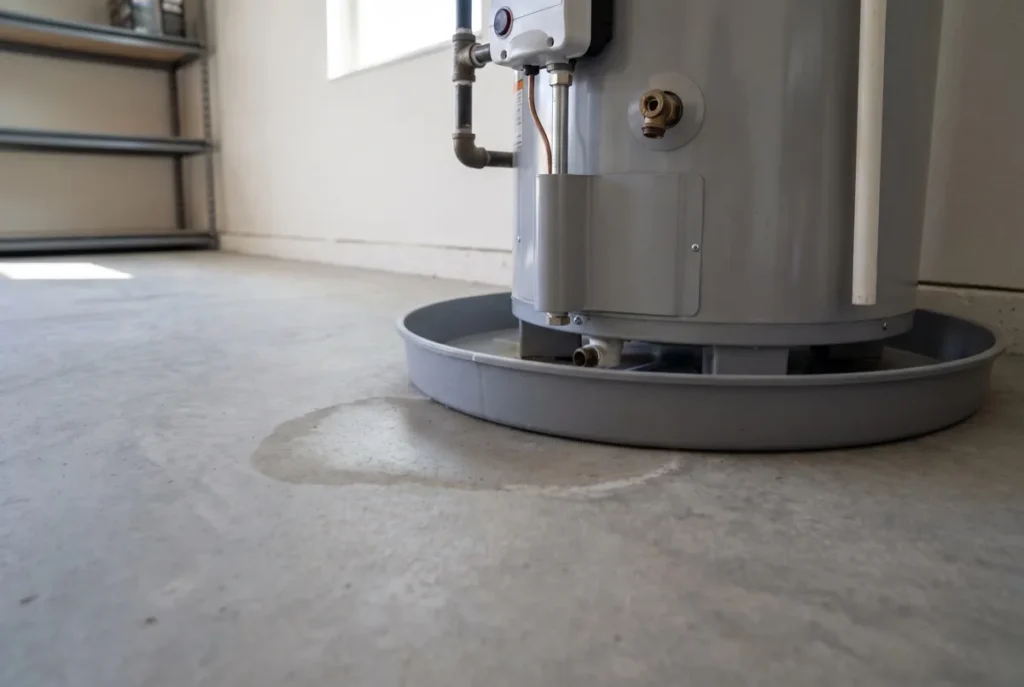
Water on the floor near the heater is the symptom that most deserves the callback rather than a search, because the same puddle can mean very different things and only one of them is patient.
Say where the water actually is. At the base of the unit, in a pan under it, running from a fitting at the top, or coming out of the pipe attached to the relief valve on the side or the top. Say whether it is a slow drip or a spread, and whether it is getting worse while you look at it. If you know where the shutoff for the heater is and you are comfortable closing it, that is a reasonable thing to do. If you do not, that is fine, and it is one of the first things the callback will walk through with you.
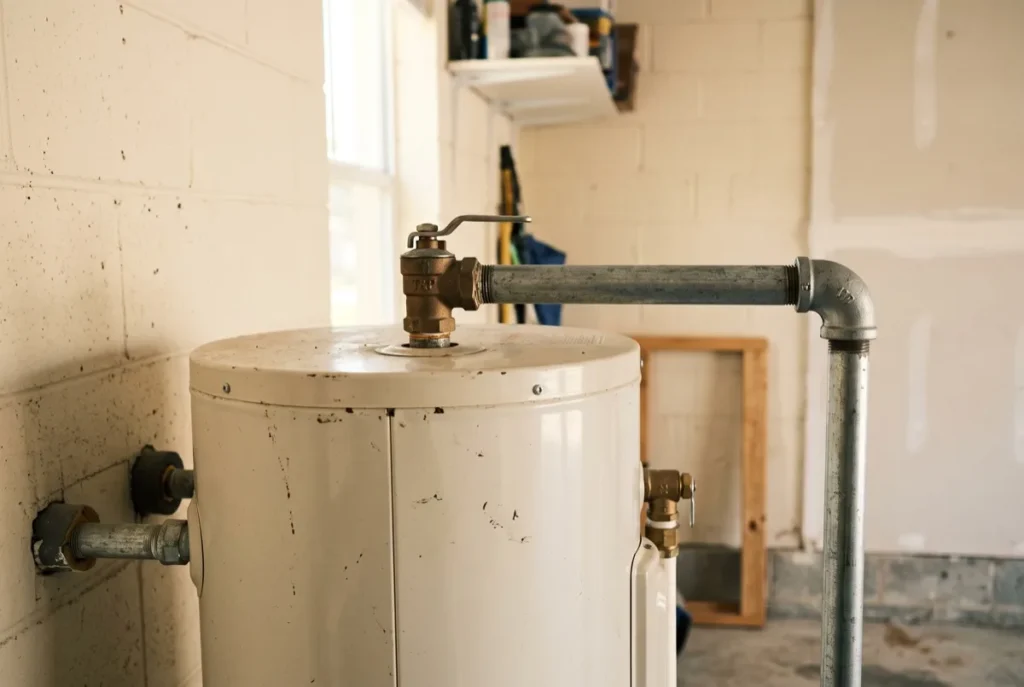
The relief valve is worth naming on its own because it dripping is a real symptom and people often assume it is normal. It is a safety device. When it releases on its own, something made it release, and the honest answer is that finding out what is a job for a professional whose state license record was read first.
And one boundary that saves time: if the water is not at the heater, the heater is probably not the story. Water appearing where nothing is installed, damp in a slab, or a bill that moved on its own is leak detection, and that page is built for exactly that.
Gas, electric, or tankless
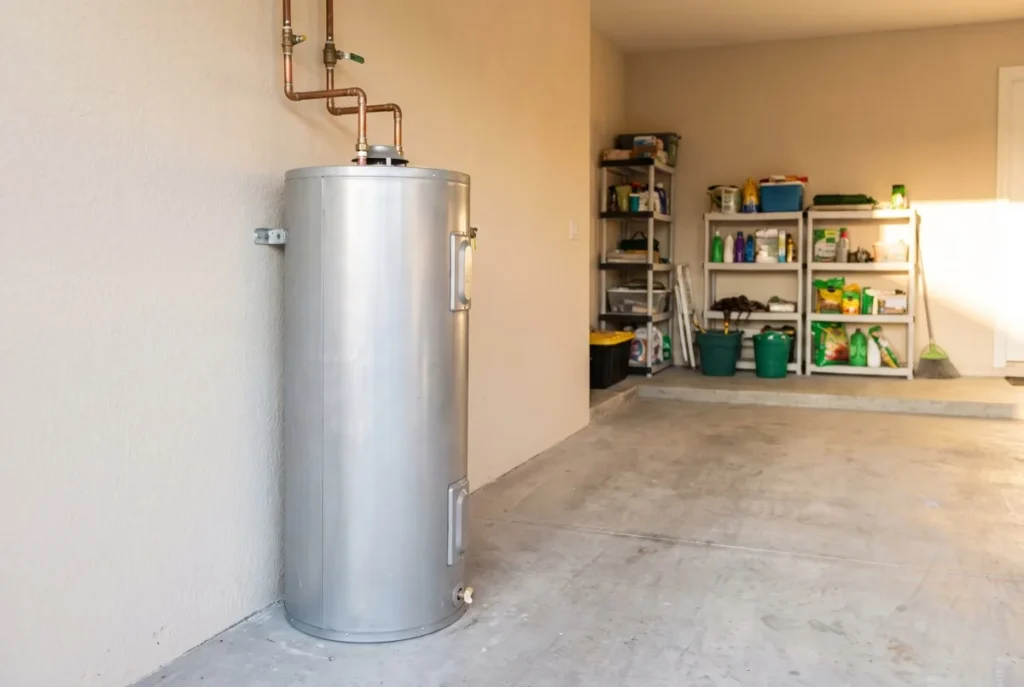
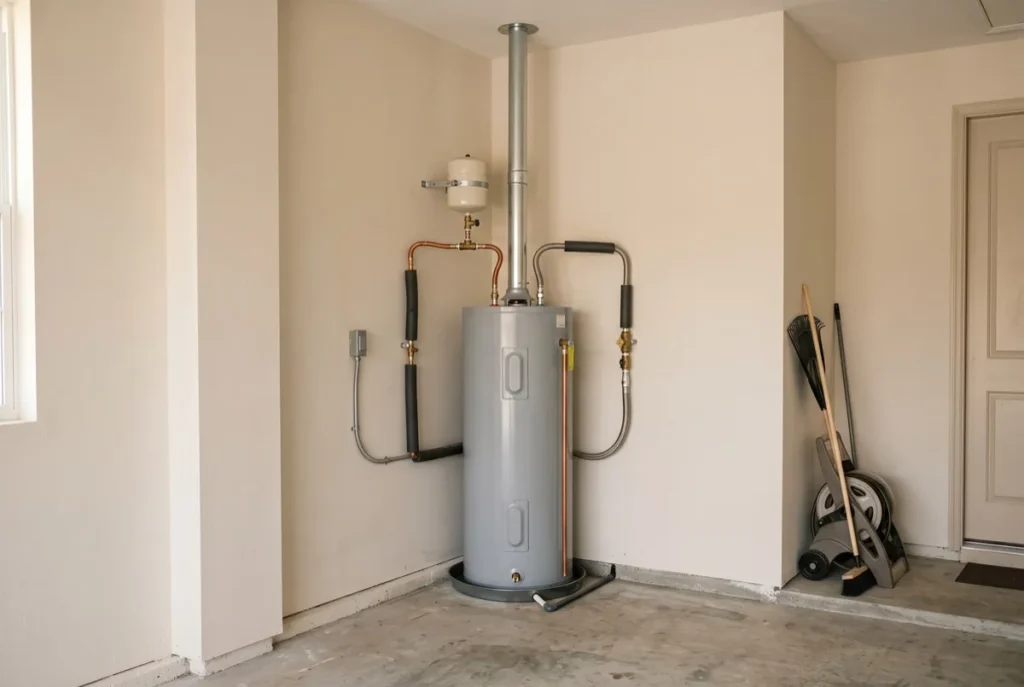
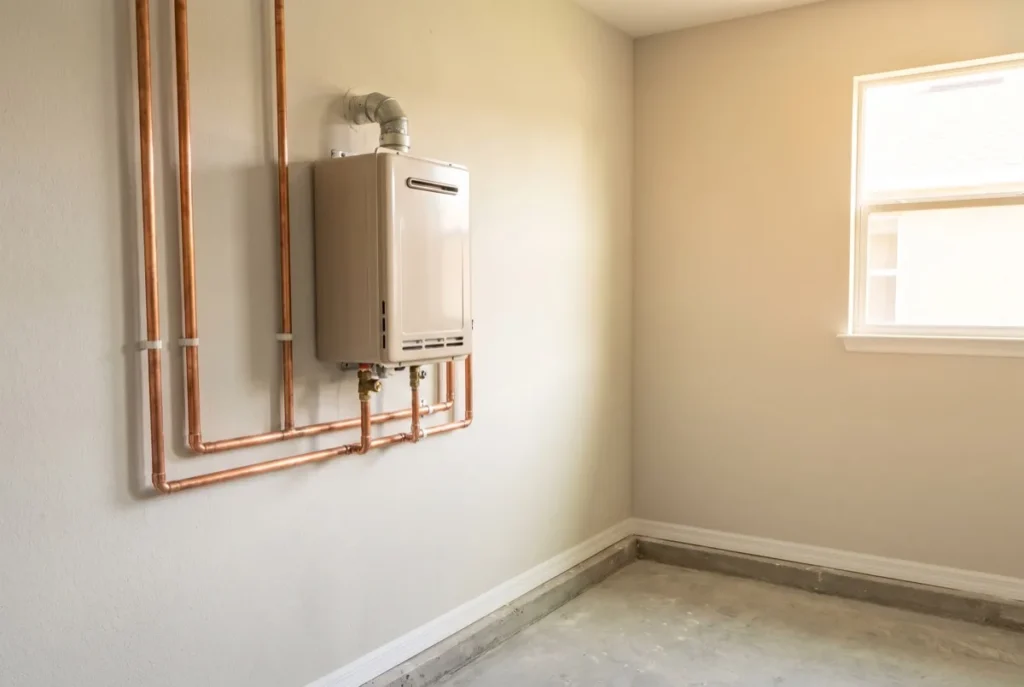
The type of unit is the single most useful thing you can tell us before anyone is matched to your job, and it is one of the first things the callback asks about. A tank in the garage, a tank in a closet, a tankless unit on an exterior wall, gas or electric: those are not interchangeable, and a water heater repair on one is not automatically a job for the person who fixes another.
You do not need to be certain. “There is a tank in the garage and I think it is electric” is enough to work with. If there is a label on the front of the unit and you can read it without moving anything, say what it says. If you cannot get to it, say that instead.
Where the unit lives matters too. A heater in a second floor closet, a heater above living space, or a heater in an attic changes what a professional needs to bring, and it changes how a leak gets treated. Say where yours is, even roughly.
When a repair is not the answer
Here is the part most pages leave out. Sometimes the honest answer is that the unit is not worth repairing, and you deserve to hear that before somebody is standing in your garage rather than after.
We do not make that call, and neither does a website. It belongs to the professional who looks at the unit, who can see how old it is, what has already been done to it, what condition the tank is in, and what has actually failed. What we can do is make sure that person is somebody whose license record was read first, so that the recommendation you get is coming from a professional the state has on record, and not from whoever answered the phone.
If you already know that is the conversation you are in, this is where water heater repair stops being the right question, and water heater replacement is the page to start on instead. And if what you want is hot water somewhere the house has never had it, that is a new unit rather than a fix, which is water heater installation.
What gets checked before a job leaves our hands
Anybody can print “licensed and insured” on the side of a van, and standing in your driveway you have no way to tell. Florida keeps the real answer in public. The Department of Business and Professional Regulation runs a license database that anyone can search, one professional at a time.
So that is what happens here. The record the state publishes for that one professional gets pulled and read as it stands, and it happens before your job leaves our hands, never after. The lookup is the step that comes first. Nobody is handed your water heater until their record has been read.
The method is deliberately narrow, and it is worth being clear about what it is not. We do not grade the professional. We do not speak for a trade as a whole. We do not treat four different trades as one thing. We tell you what the record says, and we do not tell you a record exists when it does not.
You can run the same search yourself. That is what a public record is for. It gets run here every time so that it is already done by the time you are talking to someone.
Free for homeowners
You do not pay CheckedCrew. Not to fill out the form, not for the callback, not for the match. What the water heater work itself costs is settled between you and the professional who does it. We do not set that price, we do not quote it, and we do not take a cut of your invoice.
Where we work
CheckedCrew serves Orlando, Florida. If your property sits outside the city, put the ZIP code in the form anyway and we will tell you straight on the callback whether we can help with it.
What Orlando homeowners ask when the hot water stops