Which drain is it, and what is it doing
A slow drain is the most ordinary problem a house has, which is exactly why it is described so badly on the phone. Everything comes out as “the drain is clogged”, and that one sentence covers half a dozen situations that are not the same situation at all. The fastest way to get the right plumber to your door is to say which fixture and what the water actually does.
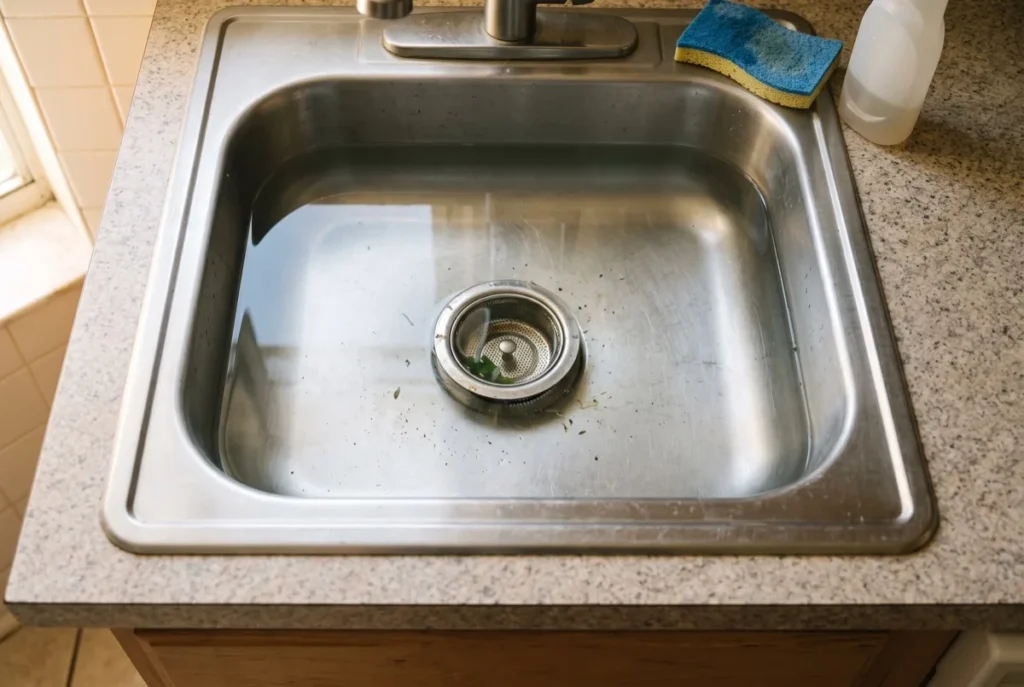
Kitchen sink. It drains slowly, or it holds water, or it drains on one side and backs up into the other side of a double basin. Kitchen lines carry grease and food, and what drain cleaning has to deal with there is different from anywhere else in the house.
Bathroom sink. Slow for weeks, then stopped. It usually smells before it stops.
Shower or tub. Water at your ankles halfway through, or standing in the tub an hour later.
Toilet. The bowl rises when you flush, then drains away slowly on its own, and it does it again the next time.
Laundry. The washer empties faster than the drain takes it, and water comes over the top of the standpipe onto the floor.
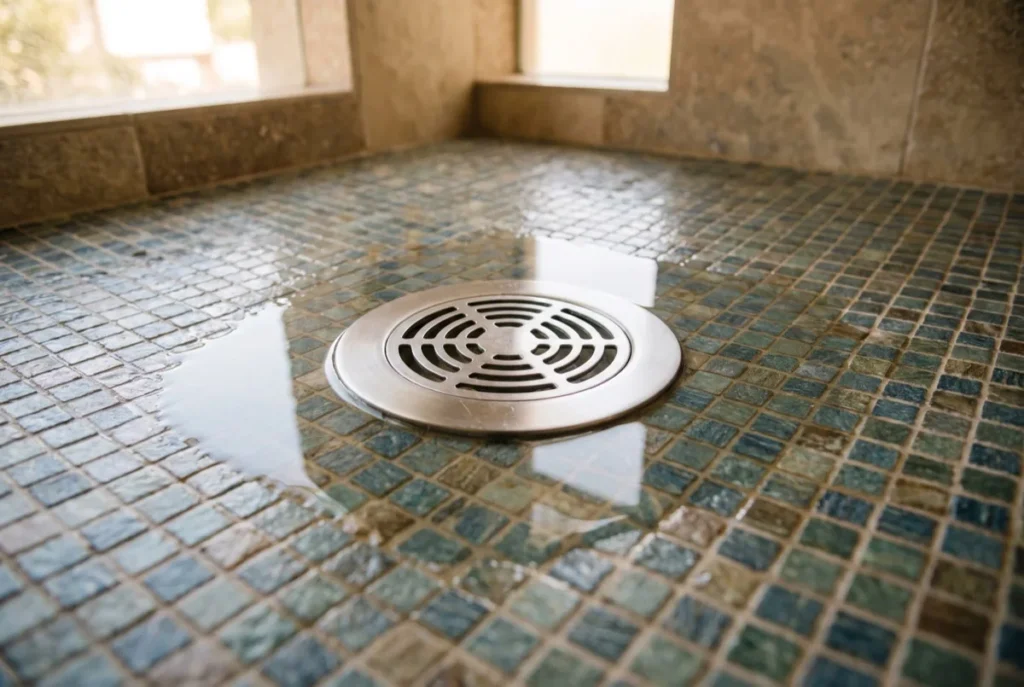
Floor drain in a garage or utility room. Usually noticed only because something else drained into it and the water stayed.
Say the room, say the fixture, and say whether it is slow or fully stopped. That is the whole triage, and you already have all three answers.
One drain or every drain
This is the one question worth getting right before anybody drives out, because the two answers send you to two different pages of this site.
If one fixture is slow and the rest of the house is fine, the problem is almost certainly local to that fixture’s line, and drain cleaning is the right page for it. Keep going.
If several fixtures act up at the same time, if the toilet bubbles when the washer drains, if water comes up in the shower when you flush, or if waste is backing up into the house, that pattern points at the main line under the yard rather than at the pipe under your sink. Drain cleaning is the wrong page for that, and sewer line repair is the right one — go there, or say it in the form and we will route it that way.
You are not expected to be sure. If you read both paragraphs and still cannot tell, write down what you noticed and let the callback sort it. Guessing wrong on the form is not a problem we hand back to you.
What we check before a plumber gets your job
Anybody can print “licensed and insured” on the side of a van, and standing in your driveway you have no way to tell. Florida keeps the real answer in public. The Department of Business and Professional Regulation runs a license database that anyone can search.
So we look. We pull the record the state publishes for that one professional, we read it as it stands, and we do it before your job leaves our hands, never after. The lookup is the step that comes first.
The method is deliberately narrow, and it is worth being clear about what it is not. We do not grade the professional. We do not speak for the trade as a whole. We do not treat four different trades as one thing. We tell you what the record says, and we do not tell you a record exists when it does not.
A clogged kitchen sink feels too small to bother checking anybody over. That is exactly the job where nobody checks, and it is the reason we run the same lookup for a slow bathroom sink that we would run for anything else. You can run that search yourself as well. We run it every time so that it is already done by the time you are talking to someone.
A clogged drain, fixture by fixture
A clogged drain is the same word for very different blockages, and the fixture tells you most of what there is to know before anyone opens anything.
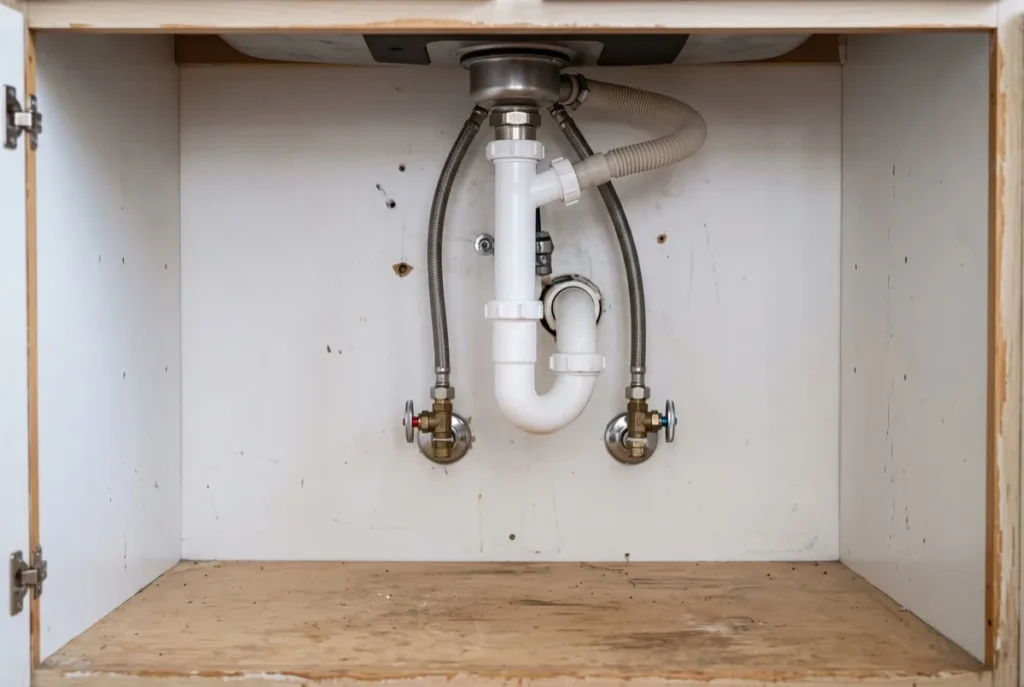
A kitchen line collects what a kitchen sends down it, which is grease that cooled, coffee grounds, starch, and the rinse off every plate. It narrows gradually rather than closing overnight, so the sink is usually slow for a while before the day it stops. If the unit under the kitchen sink is the thing that hums, jams, or does nothing when you switch it on, that is the appliance and not the line, and garbage disposal repair is the page for it.
A bathroom sink and a shower collect hair and soap, and they collect it close to the fixture. That is why a bathroom clogged drain often smells before it slows, and why it tends to come back on a schedule if only the surface of it was cleared.
A toilet that rises and then settles is holding a restriction just past the bowl. A toilet that rises while another fixture is running is pointing at the main line rather than at this fixture, and sewer line repair is where to take that one.
A laundry standpipe deals with a large volume arriving fast. It can be perfectly clear for a half load and overflow on a full one, which makes it the fixture most likely to be described as intermittent.
What we do with that on the callback is simple. Which fixture, how long, whether it is slow or stopped, and whether it has been cleared before. Those four answers are what a plumber wants to hear first, and they are all things you can see from where you are standing.
When it is drain repair and not drain cleaning
Cleaning a drain and repairing one are different jobs, and the difference is whether the pipe is dirty or the pipe is damaged. Cleaning moves what is in the way. Repair deals with the line itself.
The signal that usually separates them is repetition. A drain that clears and stays clear was a cleaning job. A drain that clears, works for a few weeks, and closes again in the same place is telling you the line has a reason to keep catching, and drain repair is the conversation that follows. The same goes for a fixture that has been cleared several times by different people with the same result.
Other things point the same direction. Water appearing under the cabinet or on the ceiling below a bathroom is not a blockage at all, and if water is showing up somewhere nothing is installed, leak detection is where that belongs. A trap or a section of pipe that has been patched more than once is a repair conversation. So is a drain that started misbehaving after work was done elsewhere in the house.
We do not diagnose that from a form, and neither should anyone else. What the callback does is gather the history — how many times, how long each fix lasted, who has been out before — so the plumber arrives knowing whether they are being asked to clear a line or to look at why it keeps closing.
What you already tried is useful information
Most people do something about a slow drain before they ask anyone, and there is no reason to be sheepish about it on the form. It is the opposite of a wasted step: what you tried, and what it did, is the closest thing to a diagnosis anyone has before any drain cleaning starts.
Say if you poured a store-bought drain product down it, and say how many times. Say if you ran a hand auger or a plastic strip down the opening. Say if you took the trap off under the sink, and whether it was full of anything. Say if it cleared for a day and came back. Say if two people have already been out to look at it.
Tell us if you have stopped using the fixture. A drain nobody has run in three days behaves differently from one that was used ten minutes ago, and it changes what the plumber expects to find when the water is turned back on.
None of that is a test. The callback is a conversation, and this is the part of it you already know the answers to.
Free for homeowners
You do not pay CheckedCrew. Not to fill out the form, not for the callback, not for the match. What the drain work itself costs is settled between you and the professional who does it. We do not set that price, we do not quote it, and we do not take a cut of your invoice.
Where we work
CheckedCrew serves Orlando, Florida. If your property sits outside the city, put the ZIP code in the form anyway and we will tell you straight on the callback whether we can help with it.
Other plumbing problems
Plumbing is a dozen different jobs sharing one word. If what you have is not the drain, these are the pages for the rest of it.
What Orlando homeowners ask about a slow drain