Start with what the roof did, not with what it is going to cost
A damaged roof almost never announces itself from inside the house. It announces itself from the driveway, in the yard the morning after wind, in a gutter full of grit, or in a photograph a neighbor took from their upstairs window. That is the description we want, and it is enough to start.
Read the line that sounds like your house and go where it points. If two of them sound like your house, say both on the form and we will sort it on the callback.
The rest of this page is about the first two lines, and that is what a roof repair actually is: the roof took something, the roof lost, and the inside of the house has not paid for it yet.
Shingle repair
Asphalt shingles fail in ways you can see from the ground, and that is the useful thing about them. Shingle repair is the work of putting the covering back where the covering came off, and it starts with knowing which kind of gone you are dealing with.
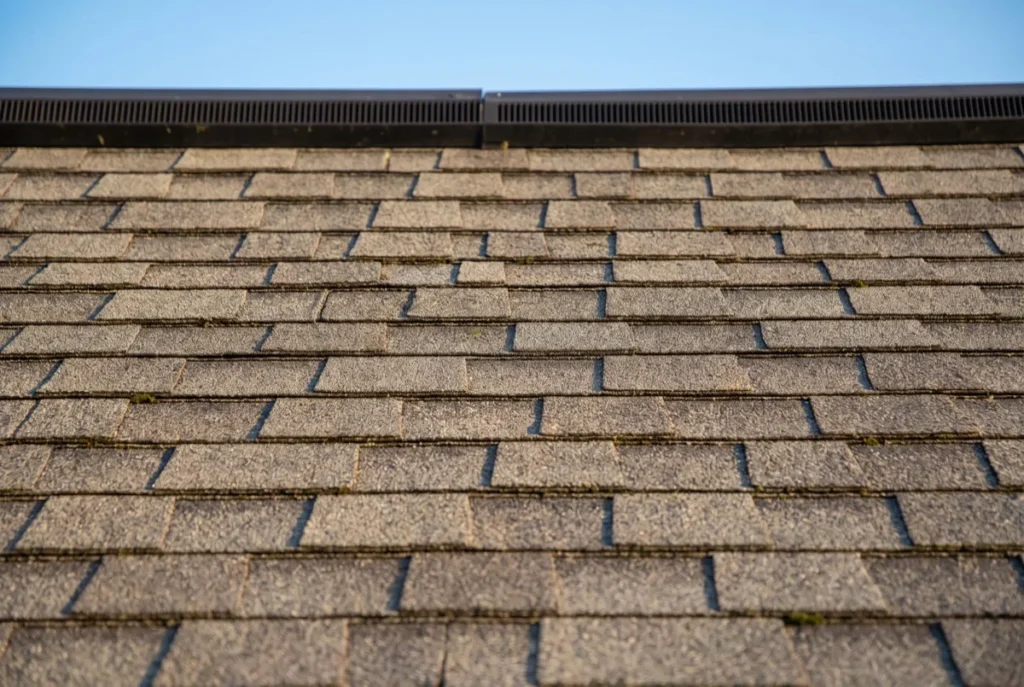
Missing is the obvious one. Wind gets under the edge of a tab, lifts it, and takes it, and what is left is a rectangle of a different color where the layer underneath is now the outside of your house. Lifted is the quieter version: the shingle is still there but it is no longer sealed down, and it will move again the next time it blows. Cracked and curled usually means age rather than weather. Bare means the granules have washed off, which is the part of the shingle that takes the sun, and it tends to show up in the gutter before it shows up on the roof.
None of those are things you should be climbing up to confirm. What helps on the callback is which slope it is — front, back, garage side — roughly how many you can count from the ground, whether any of them ended up in the yard, whether the roof has been repaired before, and roughly how old it is if you happen to know. “I have no idea how old it is” is a normal answer and it does not stop anything.
One thing worth knowing before anybody starts: shingle repair on an older roof rarely comes out invisible. Colors weather, production runs change, and a patch on a fifteen-year-old slope can be the right repair and still be a patch you can pick out from the street. A roofer will tell you what matching looks like on your specific roof. It is a real question, it is not a reason to leave the roof open, and if the answer turns out to be that too much of the roof is involved for a patch to make sense, roof replacement is the page for that conversation.
Storm, wind, and hail damage
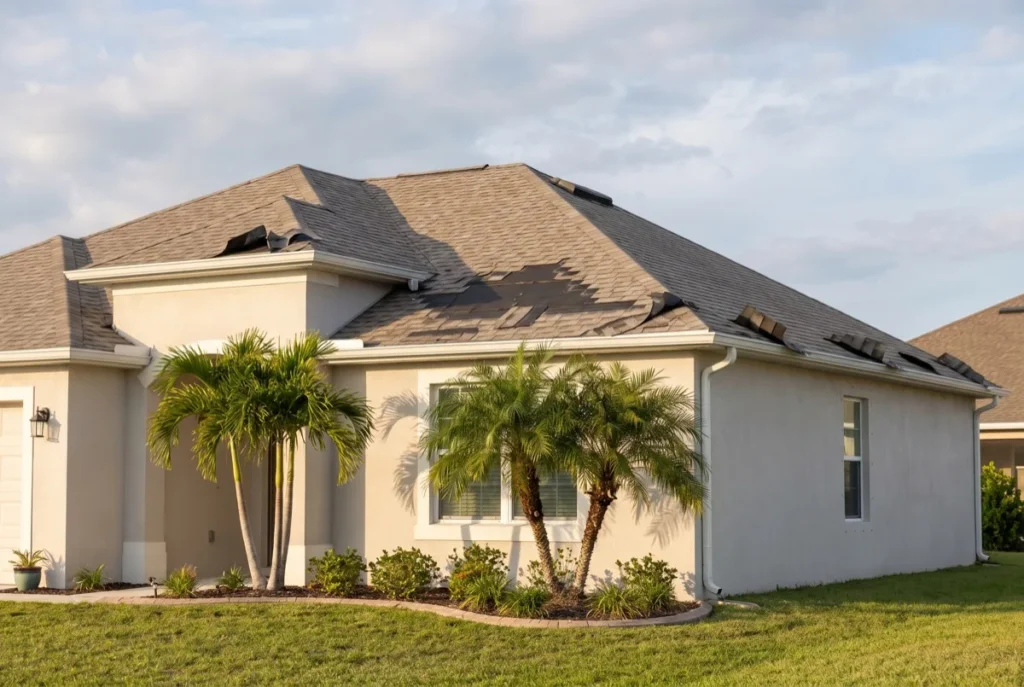
Roofs in Orlando live through a storm season every year, and this section is about the kind of roof repair that starts with something the weather did rather than with anything the house did on its own. Wind is the big one, and it does not need to be a named storm to matter: a gust gets under an unsealed edge and works it like a page. Hail is the sneakier one, because a bruised shingle can look intact from the driveway and still have lost the granules that were protecting it. Then there is the plain physical version, which is a branch, a piece of somebody’s fence, or a section of a neighbor’s roof landing on yours.
Roof repair after a storm starts with a description, not a diagnosis. What the weather did, when it did it, what you found afterward, and where you found it. If you took photographs from the ground, keep them. If the debris is still in the yard, mention it.
One honest note about the weeks after weather, because this is exactly where a homeowner gets told a lot of things. We are not going to tell you how quickly a roof gets looked at after a regional storm, because that depends on the people doing the work and not on us. What we do tell you is further down this page: whoever your job reaches, we read that professional’s state license record before it gets there.
If what a carrier needs from you is a documented opinion on the roof rather than the repair itself, that is roof inspection, and it is a different page.
Flashing, boots, and the places a roof gives out first
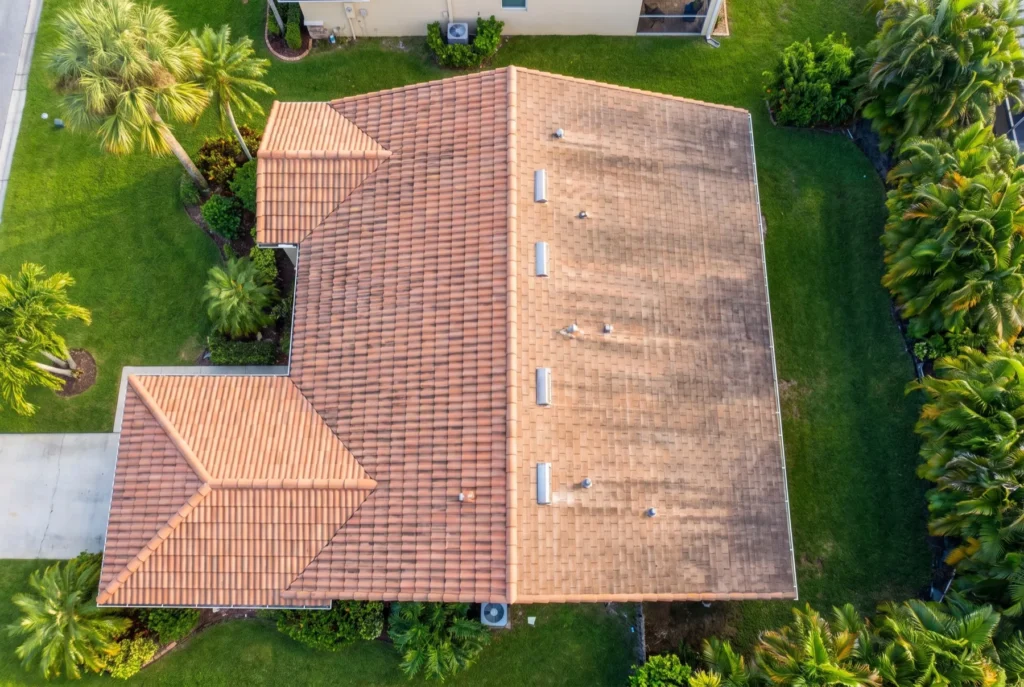
Not all roof damage happens out on the open field of the roof. A lot of it happens where the roofing stops and something else starts: the flashing where a roof meets a wall or a chimney, the rubber boot around a plumbing vent pipe, the curb around a skylight, the ridge vent along the top, and the valleys where two slopes run into each other. Those are the seams, and seams are where a roof gives out first.
They also fail quietly. A vent boot splits from years of sun and there is nothing to see from the ground at all. A section of flashing lifts a quarter of an inch off a wall and looks like nothing. This is one of the few parts of roof repair where the damage is already real on the roof while the view from the driveway is still clean, and it is worth mentioning on the callback if anyone has ever told you about it before.
If one of those seams has already let water into the house — a ceiling stain under a skylight, a wet patch on a wall below a chimney, anything actively wet — that is roof leak repair rather than this page, and going straight there gets you to the right conversation faster.
Is water coming in right now?
If the answer is yes, this is not your page, and we would rather say so than keep you reading. A ceiling that is wet to the touch, a stain that is bigger than it was yesterday, water running down the inside of a wall, or a bucket you have already emptied once is an active leak. Roof leak repair is the page written for that, and it treats it as what it is. Either way, put it in the form in your own words — the callback sorts out the rest.
This page is for the other case, and it is a genuinely different situation. The roof took damage and the inside of the house has not paid for it yet. Shingles gone after wind. A section of flashing standing off a wall. A slope that lost its granules. Nothing on the ceiling so far. That gap between the damage and the water is not a gap that stays open indefinitely, because the layer now doing the work up there was never designed to be the outside of a house.
Repair or replacement, and who should be answering that
Repair keeps a roof going. Replacement resets it. The two are not competing offers and they are not the same conversation, and the honest version is that the call belongs to someone who has been on the roof, not to a form, not to a phone call, and not to us.
There are a few things that tend to push a roof toward the second answer rather than the first, and it is fair for you to know them before anyone says them out loud to you. Damage that shows up on several slopes rather than in one area. A roof already near the end of the life its material was rated for. Repairs that keep landing in a new place each time. A slope where the granules are gone broadly rather than in a patch.
Say what you are seeing and let the person on the roof answer the rest. What we do is make sure the person going up has a state license record we already read.
What we check before a roofer gets your job
Anybody can print “licensed and insured” on the side of a truck, and standing in your driveway after a storm you have no way to tell. Florida keeps the real answer in public. The Department of Business and Professional Regulation runs a license database that anyone can search.
So we look. We pull the record the state publishes for that one professional, we read it as it stands, and we do it before your job leaves our hands, never after. The lookup is the step that comes first.
The method is deliberately narrow, and it is worth being clear about what it is not. We do not grade the roofer. We do not speak for the trade as a whole. We do not treat four different trades as one thing. We tell you what the record says, and we do not tell you a record exists when it does not.
You can run the same search yourself. That is what a public record is for. We run it every time so that it is already done by the time you are talking to someone, which on a roof matters more than on almost anything else in the house: you are not going to be standing next to this person while they work, and most of what they do happens somewhere you cannot see it.
Free for homeowners
You do not pay CheckedCrew. Not to fill out the form, not for the callback, not for the match. What the roof work itself costs is settled between you and the professional who does it. We do not set that price, we do not quote it, and we do not take a cut of your invoice.
Where we work
CheckedCrew serves Orlando, Florida. If your property sits outside the city, put the ZIP code in the form anyway and we will tell you straight on the callback whether we can help with it.
What Orlando homeowners ask about roof repair